Central Saint Martins BA Fashion show 2026:now, before, and later
- Vittoria

- 19 ore fa
- Tempo di lettura: 5 min
It has been a while since the last time I published anything on this blog – which also serves as a personal portfolio, however I am unsure of how many hiring managers have actually taken a look at it in the last few years.
These years have been a whirlwind of new experiences, heartbreaks and, as Churchill famously said, “blood, toil, tears and sweat” – hence the break from writing about fashion and similar on this blog. I am still in a place in which things are just as uncertain as ever, navigating uncharted waters and unsure about what the future has in store for me. Still, I simply cannot wait for everything to be perfectly aligned before I act so this is as good a time as ever to exhume emptypockets (and perhaps change its name).
On 3 June, I had the privilege of attending the Central Saint Martins BA Fashion Show 2026, thanks to a very kind invitation from Sarah Gresty, Course Leader for BA Fashion Design. Having attended three CSM’s end of year fashion shows so far, always due to the generosity of Sarah, I am now able to compare the different cohorts and their creations.
The 2026 students presented collections that still had the same hunger for art and exuberance but felt much more commercially focused compared to previous years. Many of the collections that walked down the runway had pieces that could easily be bought by fashion enthusiast.
The fashion show started off strong with Polina Kadilnikova, who won the L'Oréal Professionnel Young Talent Award. Her collection prominently featured shades of blue and yellow – an homage, like the landscapes depicted on the fabrics created by Ukrainian artisans, to Ukraine, where she grew up. The collection, called Casualties, asks “what happens to identity if your home disappears?” and aimed to remind people that the war in Ukraine, now in its fourth year, has forced people to “flee and leave everything behind”. Because of the hues and unexpected depths and dimensions, the clothes also had a touch of René Magritte and Surrealism – tying the roots and time period of the movement with the aim of Casualties.
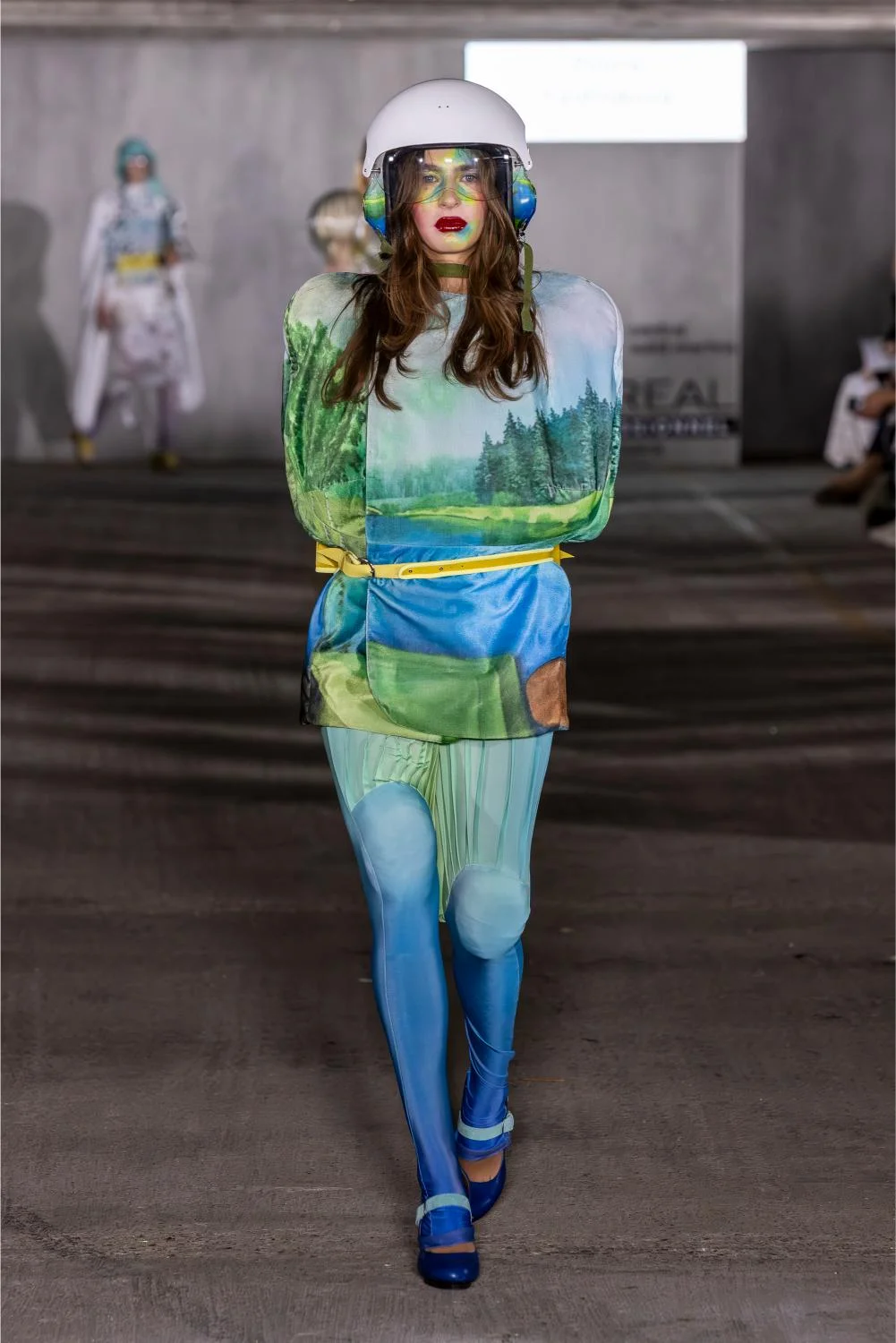
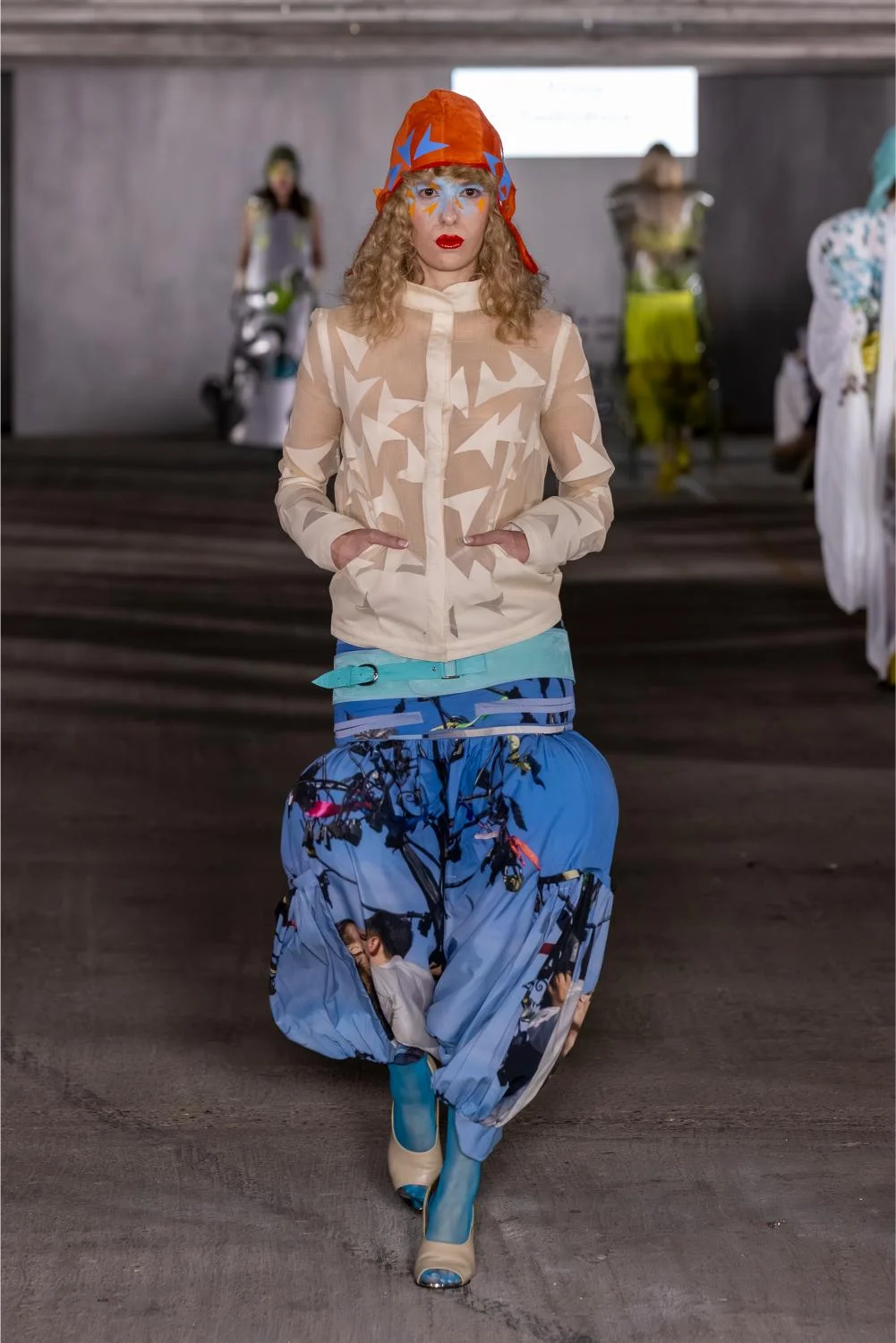
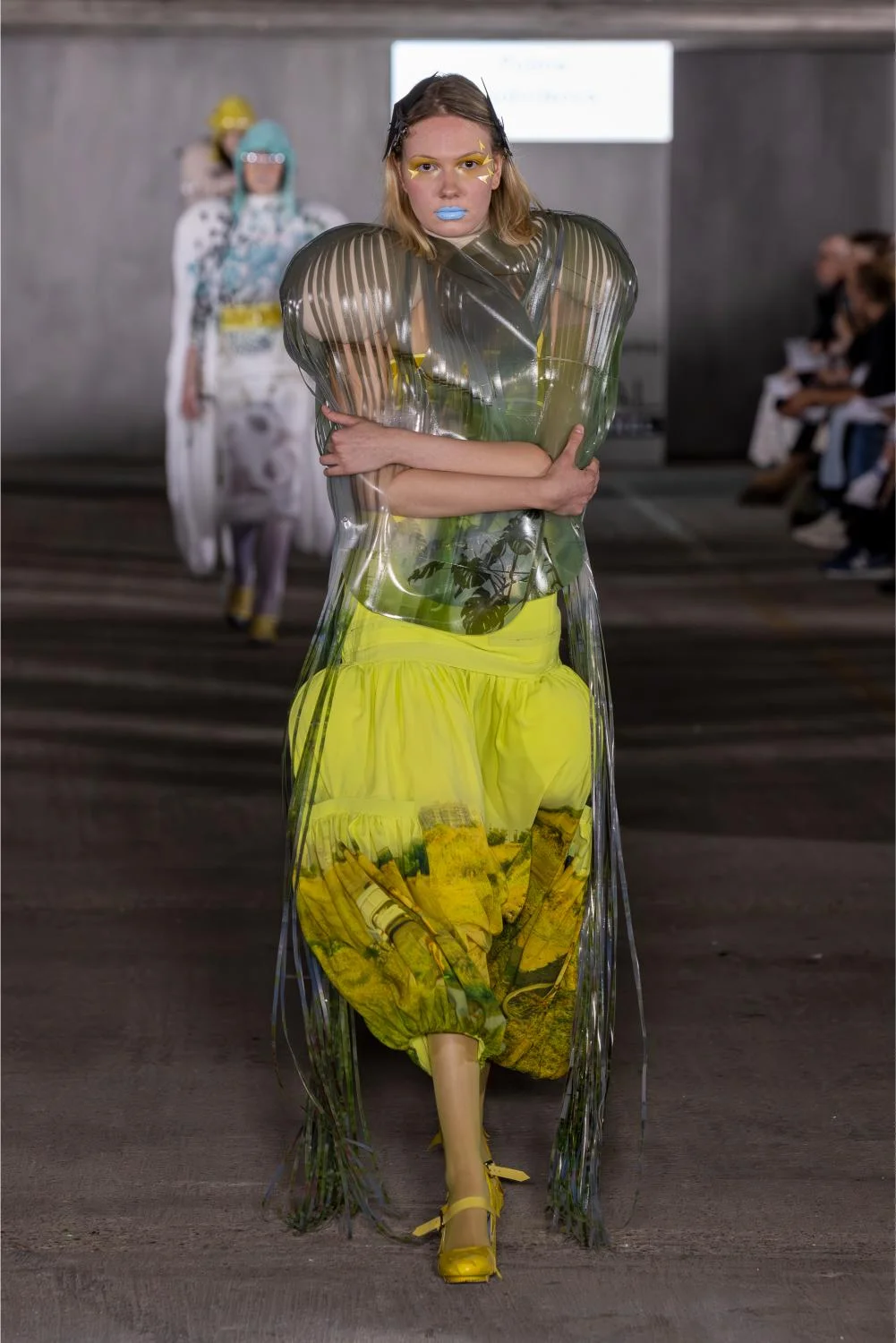
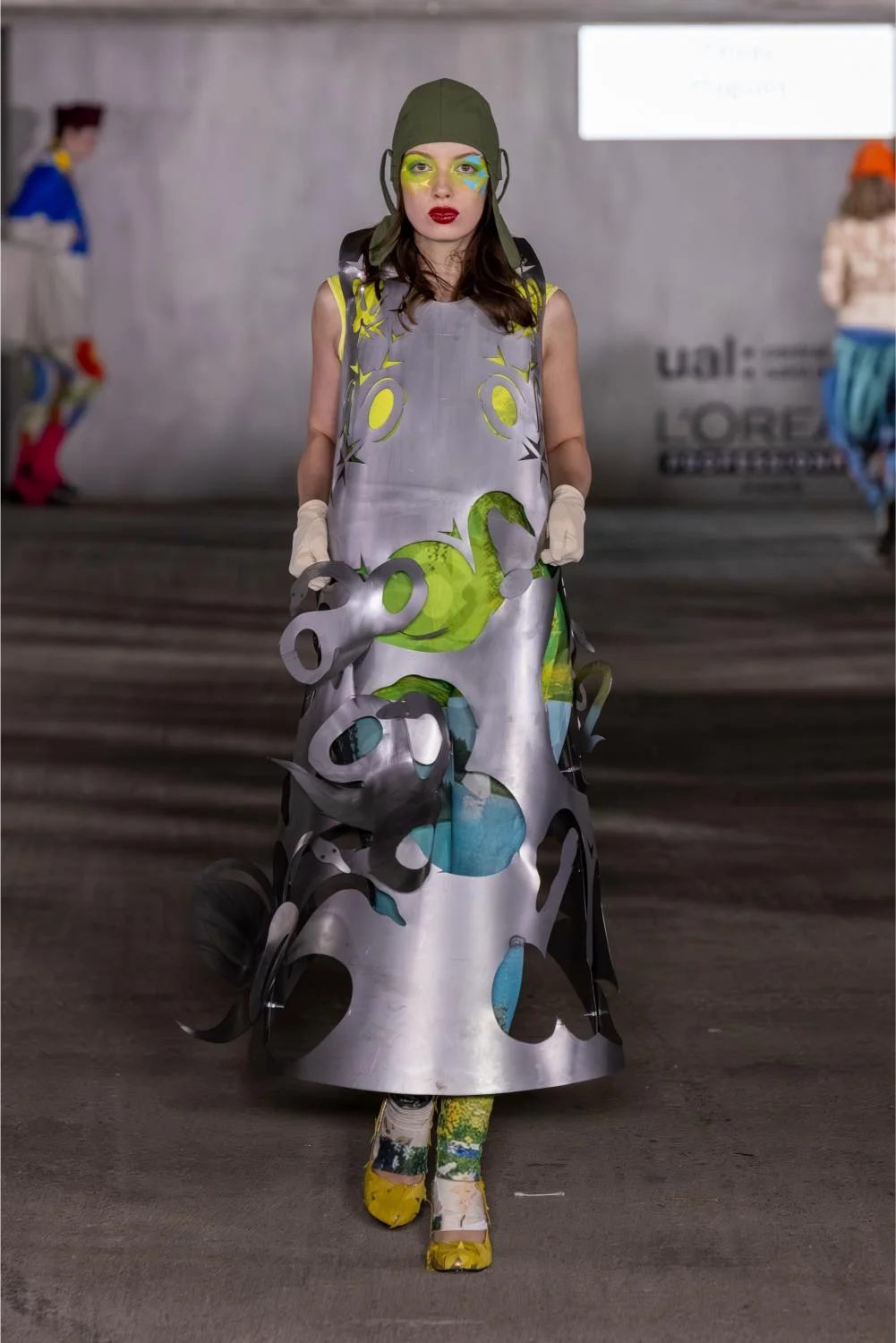
Polina Kadilnikova
Another collection which touched upon the nostalgia of leaving one’s home, but in a different manner, was that of Yuki Naka, Quiet Traces. A collection that struck as highly intimate but highly relatable too. Dissolving and fading materials were used on the garments, such as bubbles and soap, highlighting the ephemerality of belonging and of family. Torn wallpapers, letters, set tables, all featured down the runway, easily bringing childhood memories back and wishing to smell the air of simpler times.
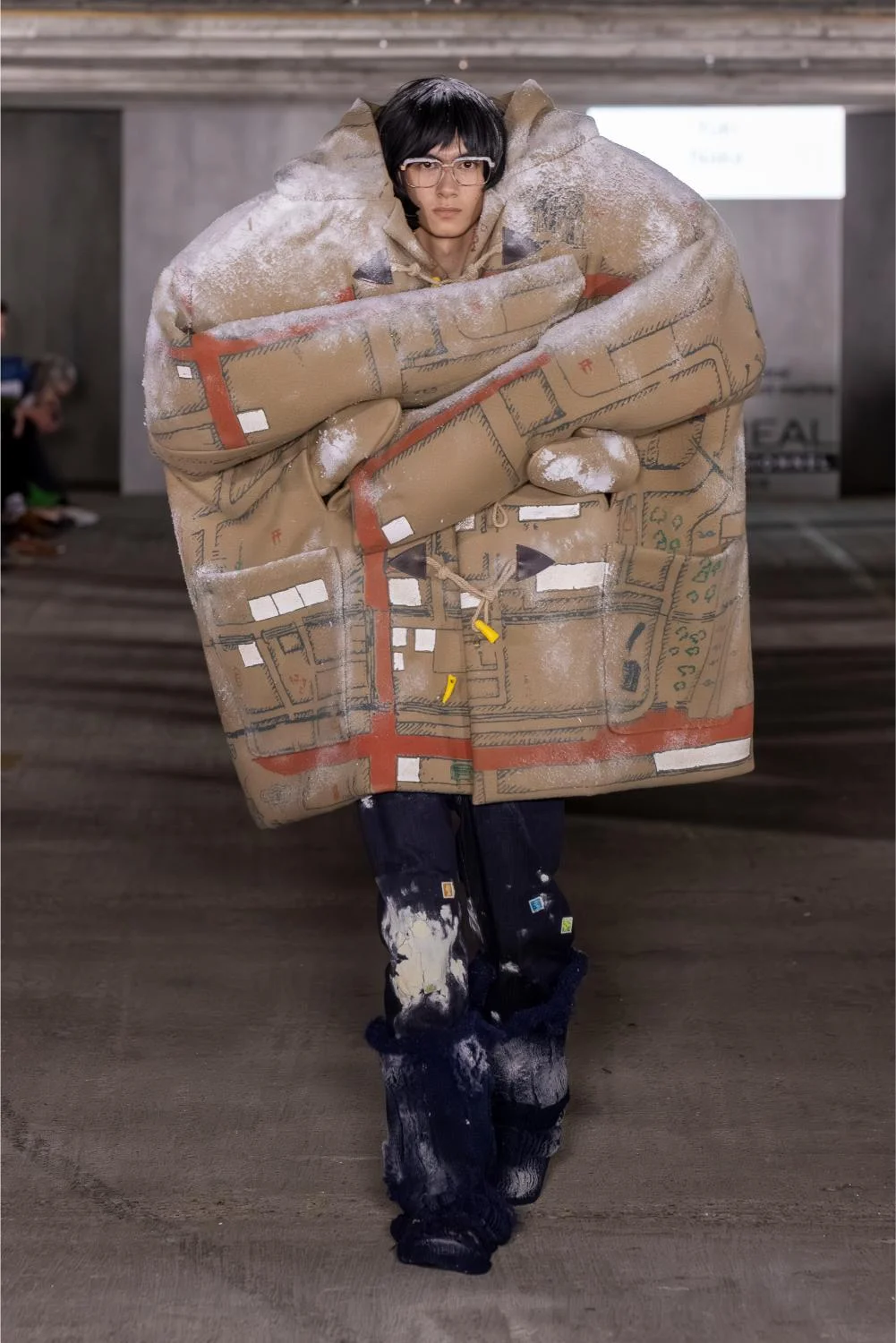
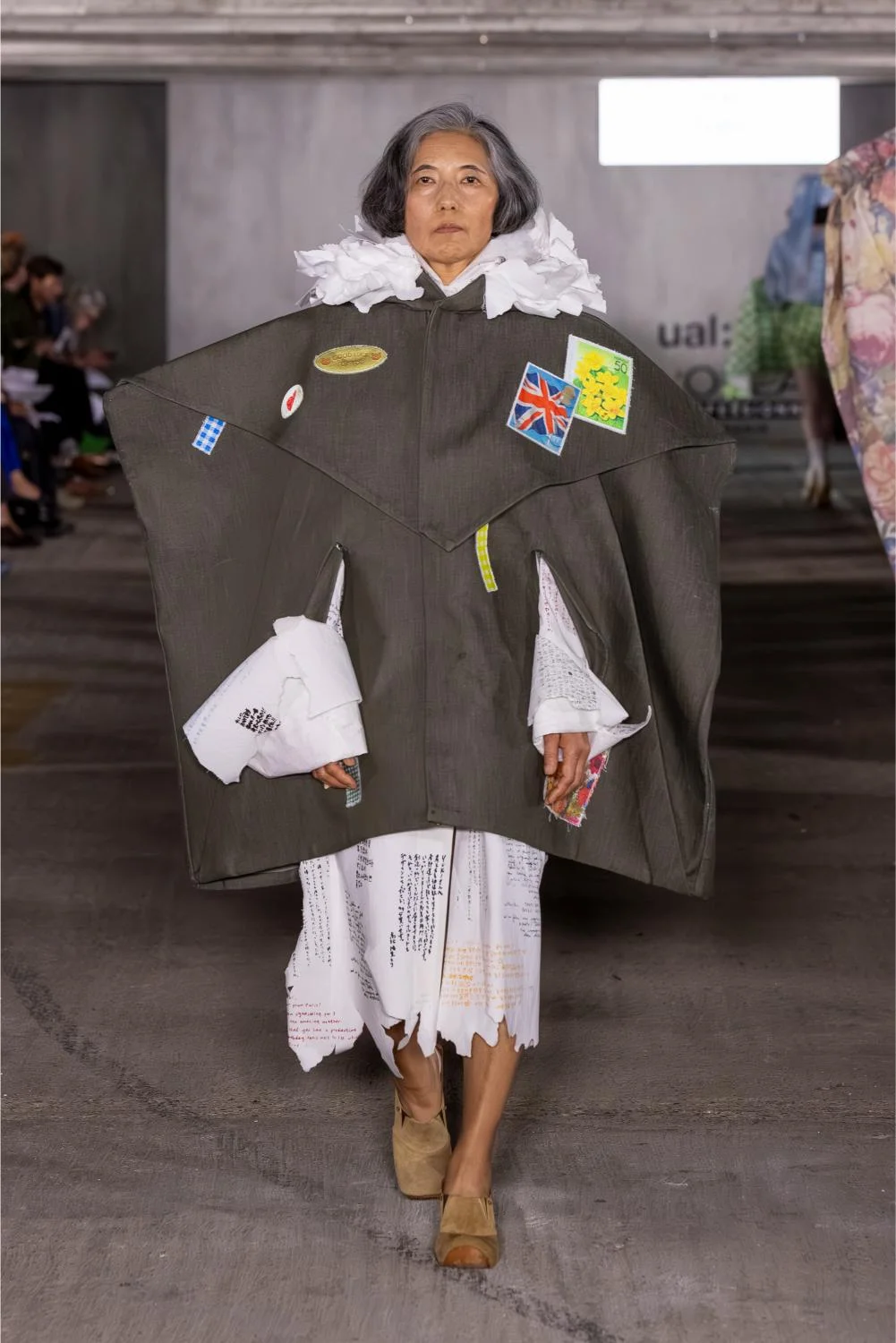
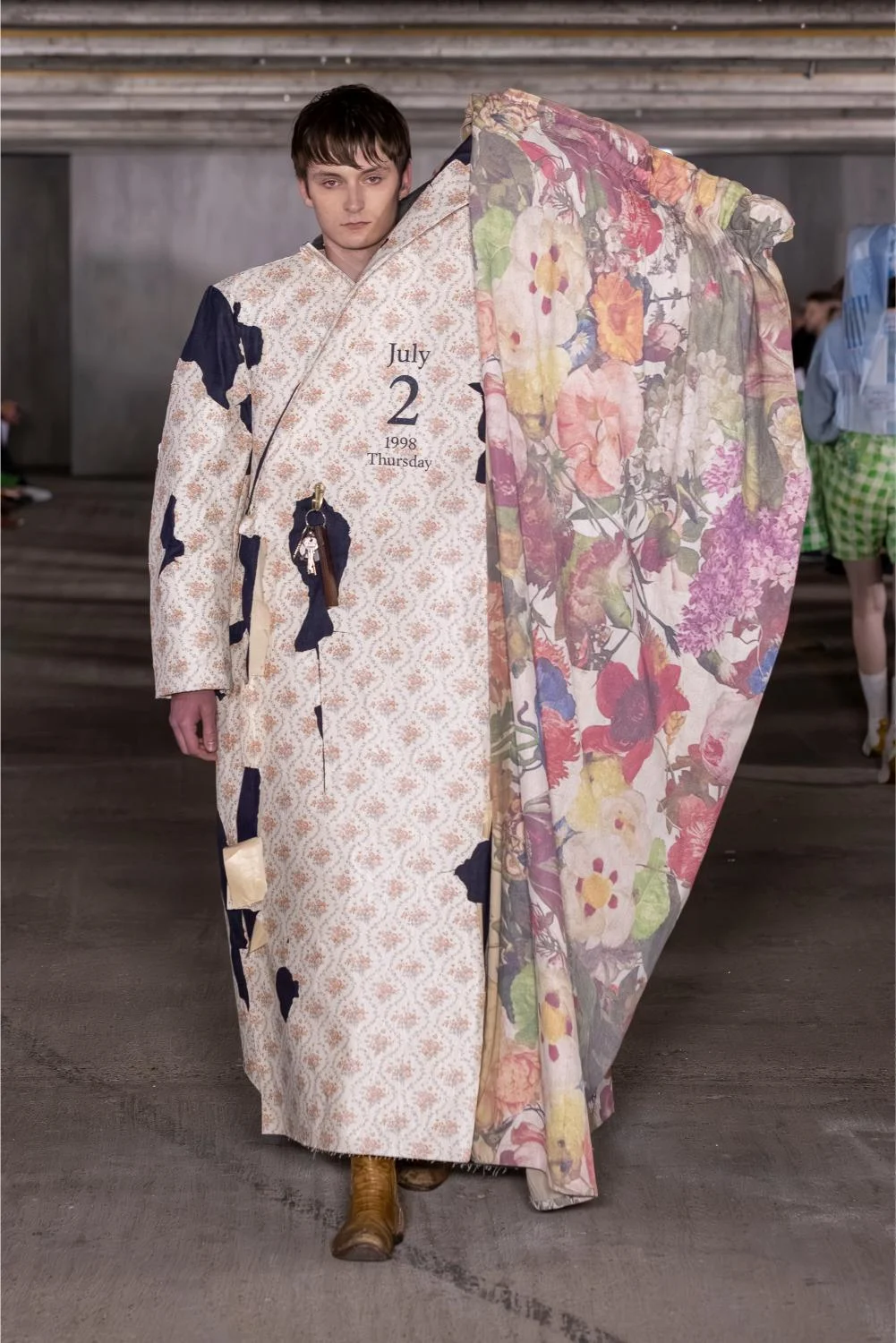
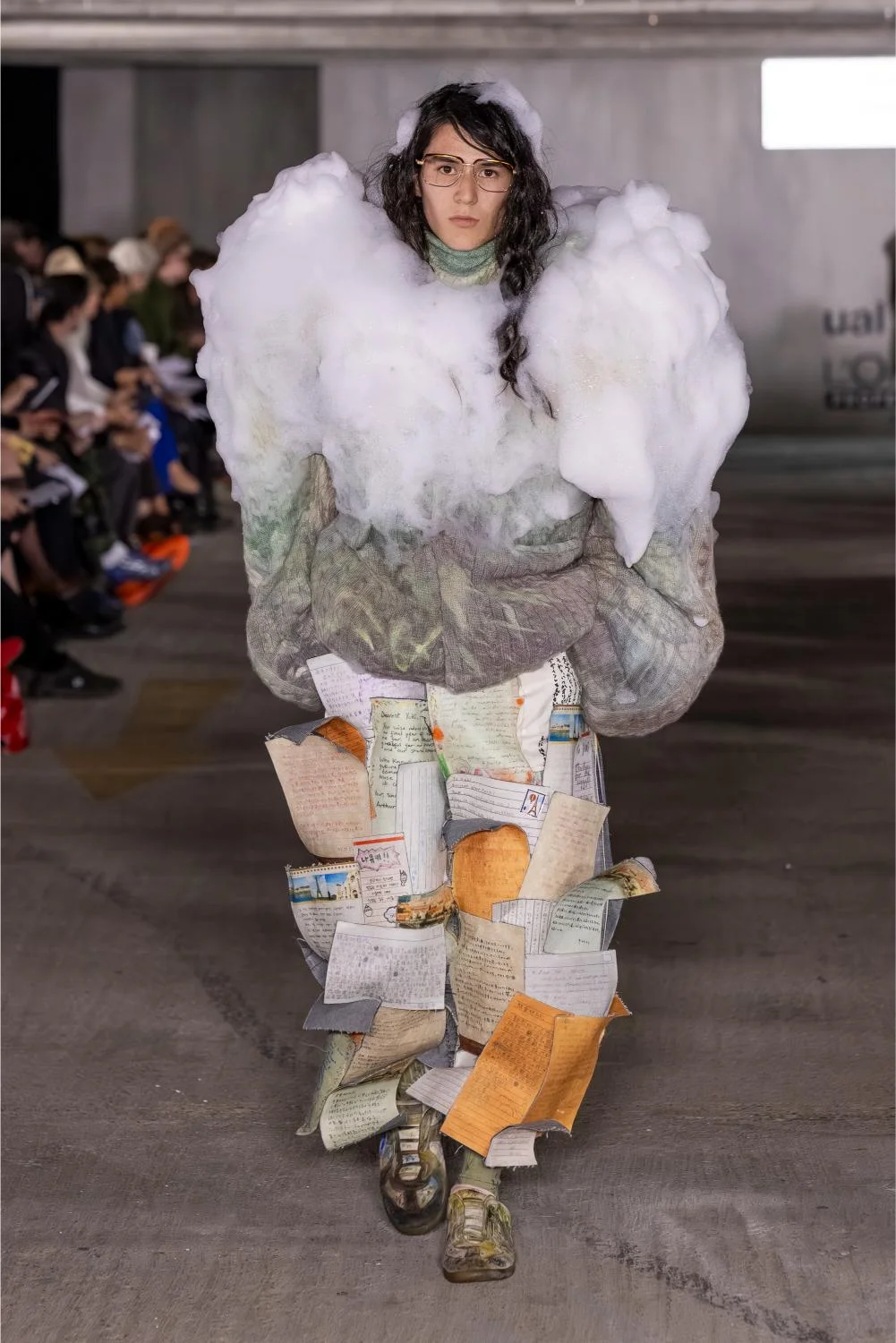
Yuki Naka
One of the two runner-ups for the L'Oréal Professionnel Young Talent Award was Arora Nielson. A student of knit design, her collection included trompe-l'œil and intricated coats, which, in spite of the richness, and helped by the soft colours, felt cosy and welcoming.
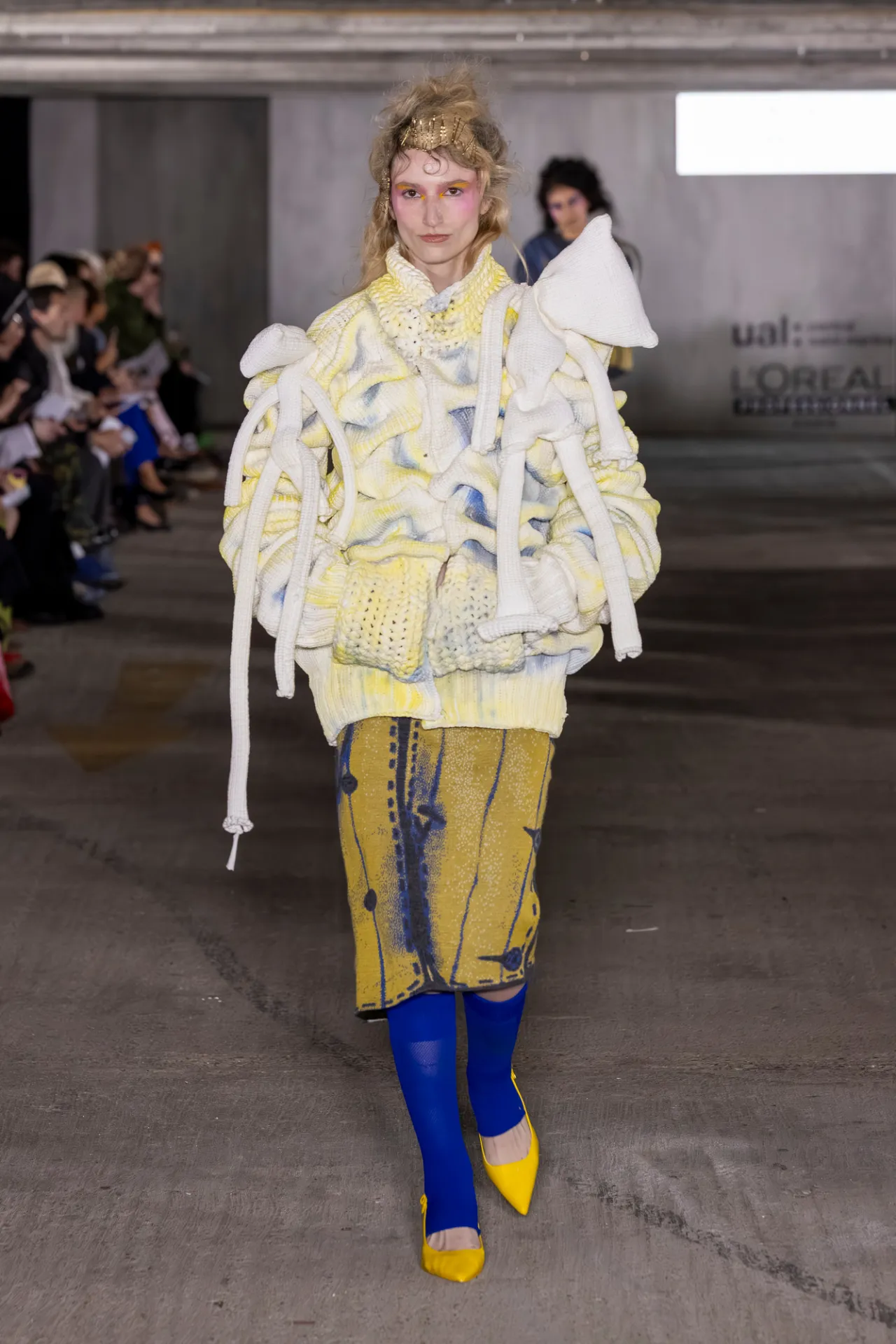
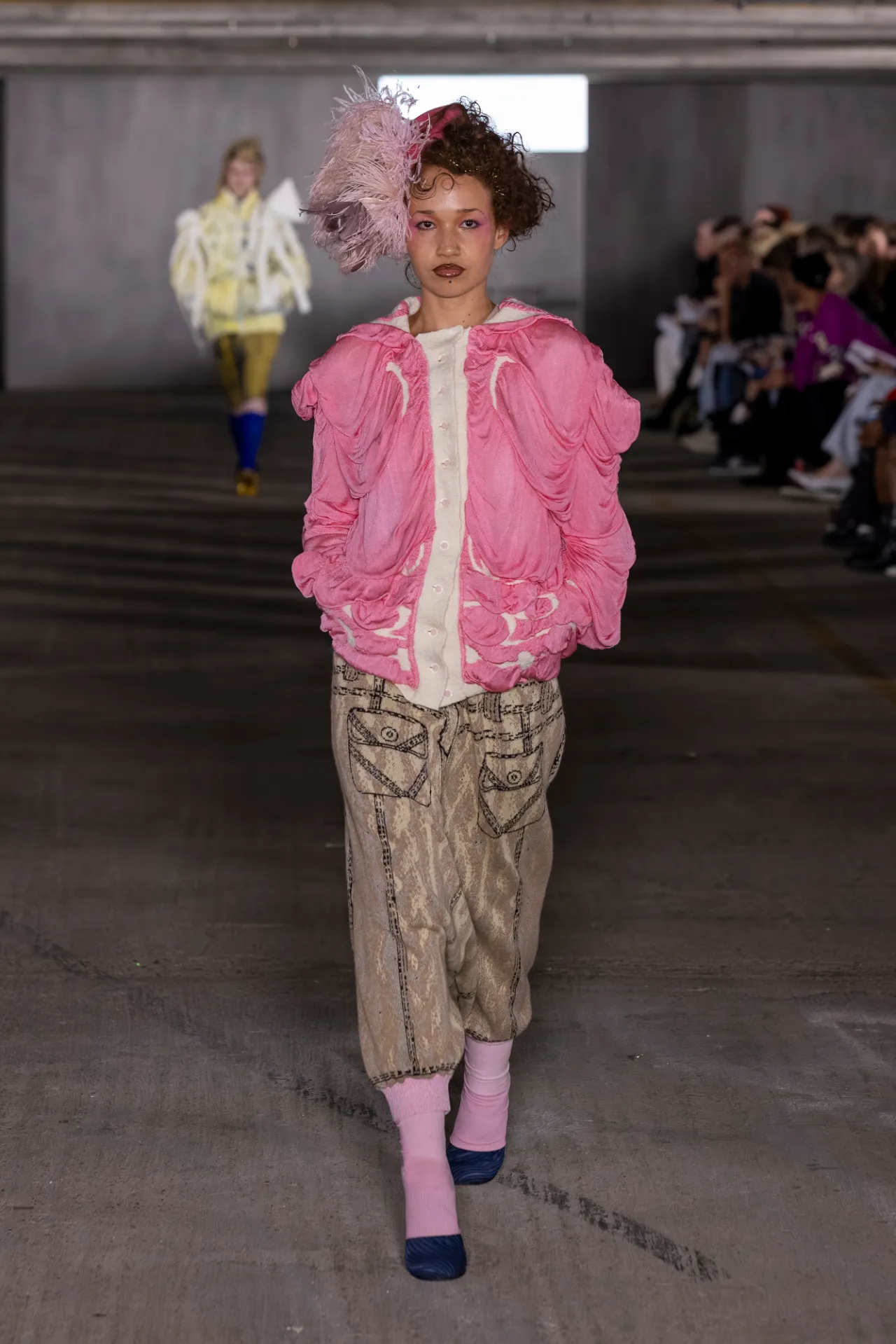
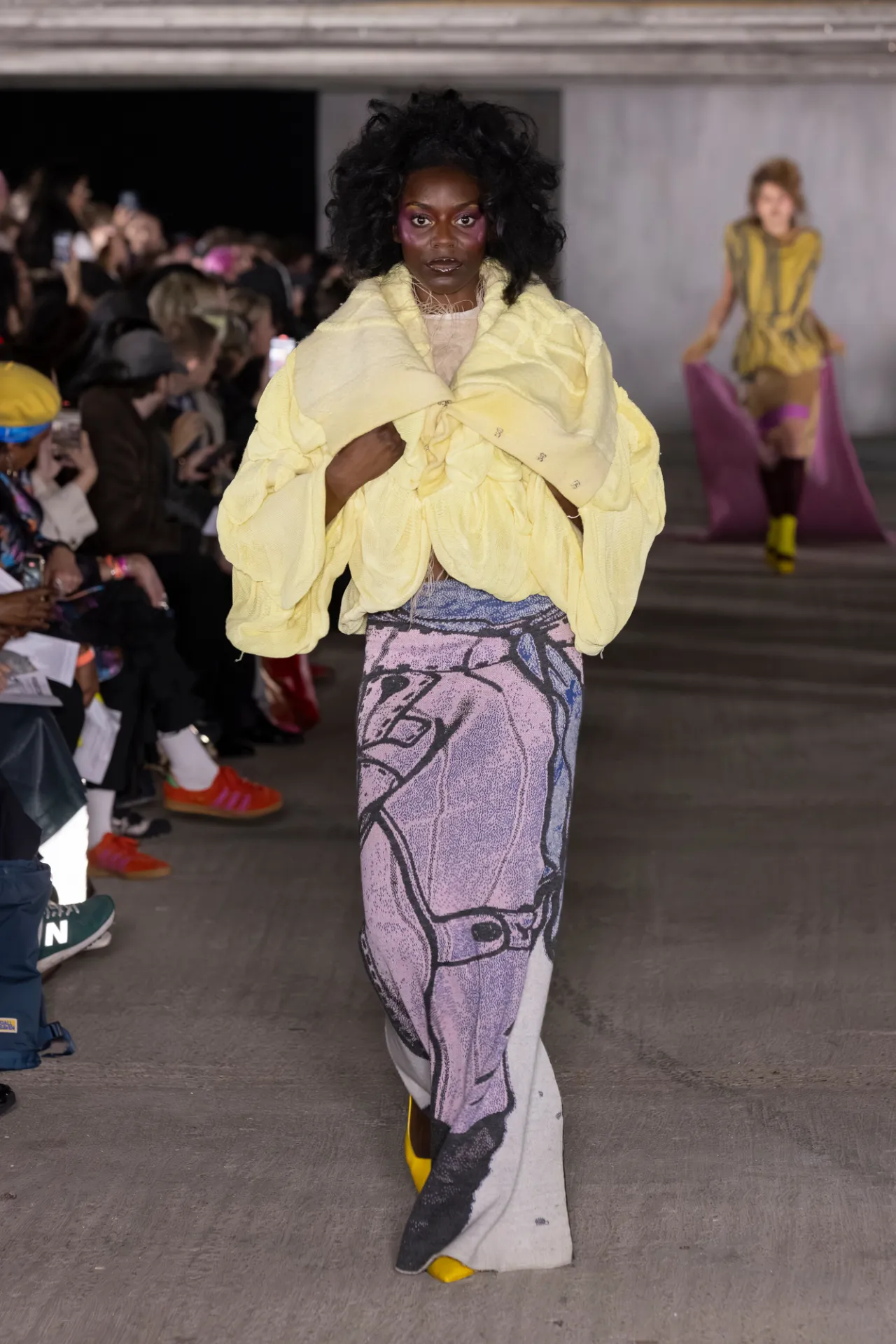
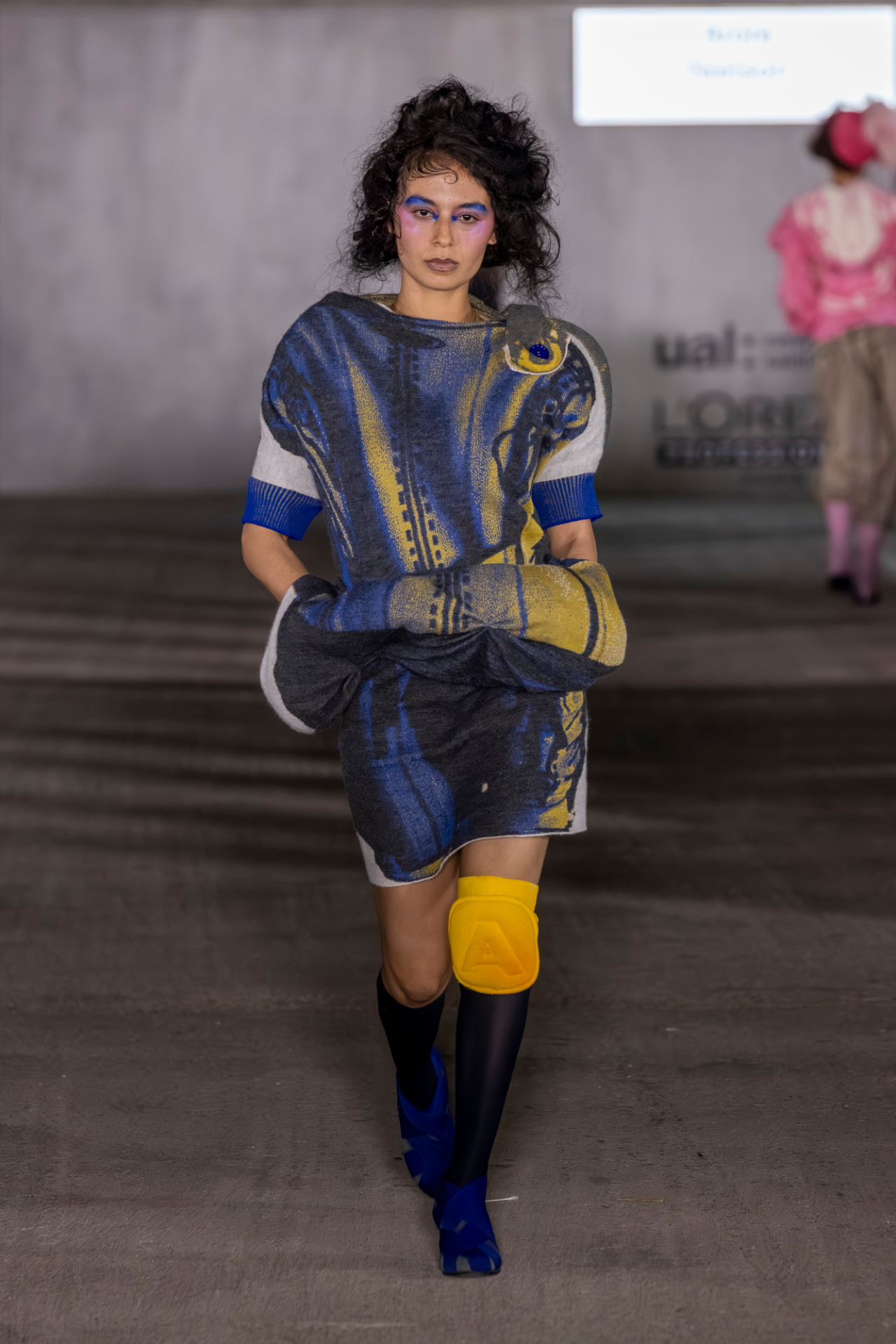
Arora Nielson
Opposite to this cosy feeling, was Harley Angrabeit collection, which showed Dalston Market and the “aunties and uncles” who frequent it as well as their “rudeness, badness.” A loud, unapologetic collection with flashy colours, fabrics, sparkles and loong toe nails. The products and energy of the market became ginormous replicas on the bodies of the models making the whole collection exquisite.
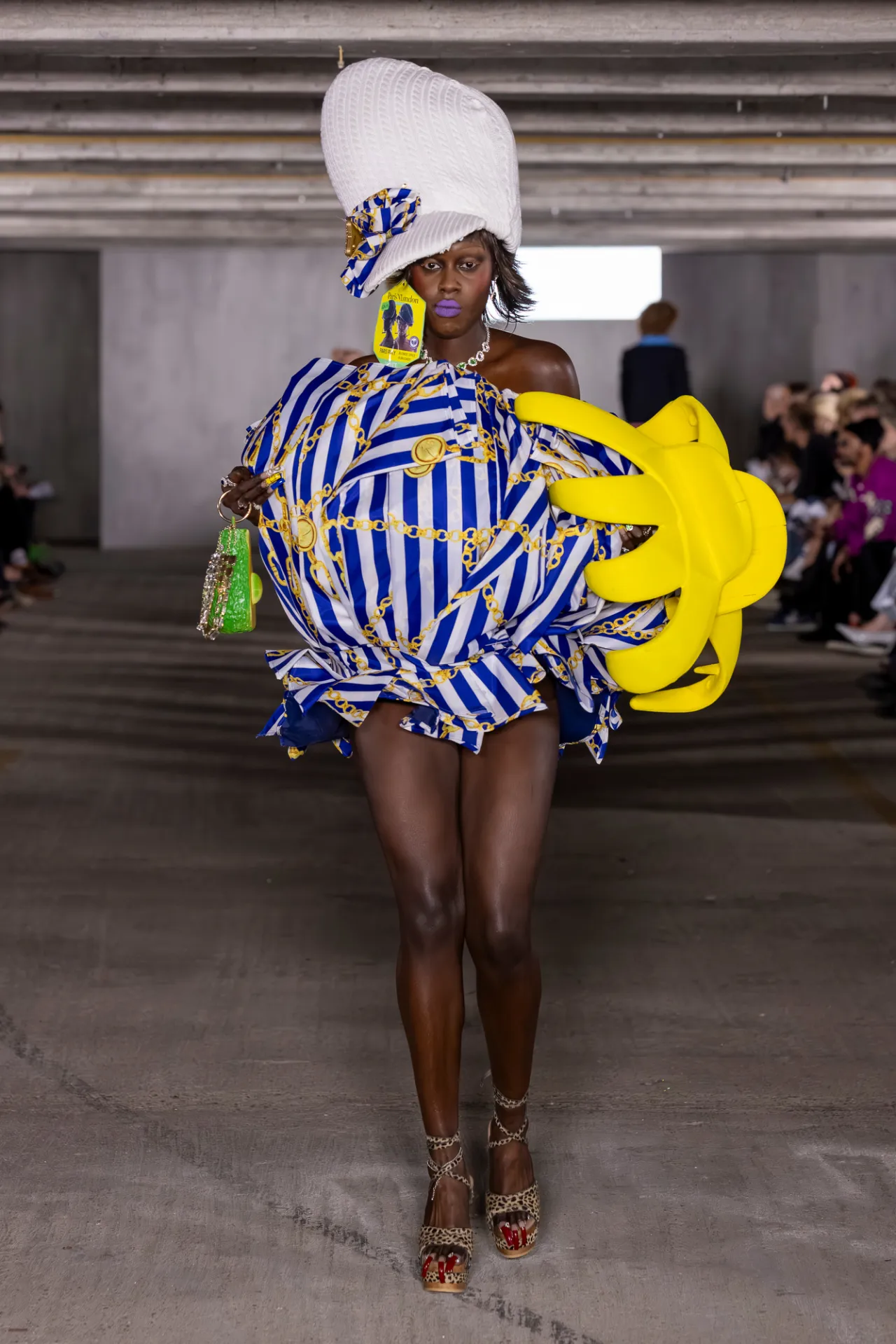
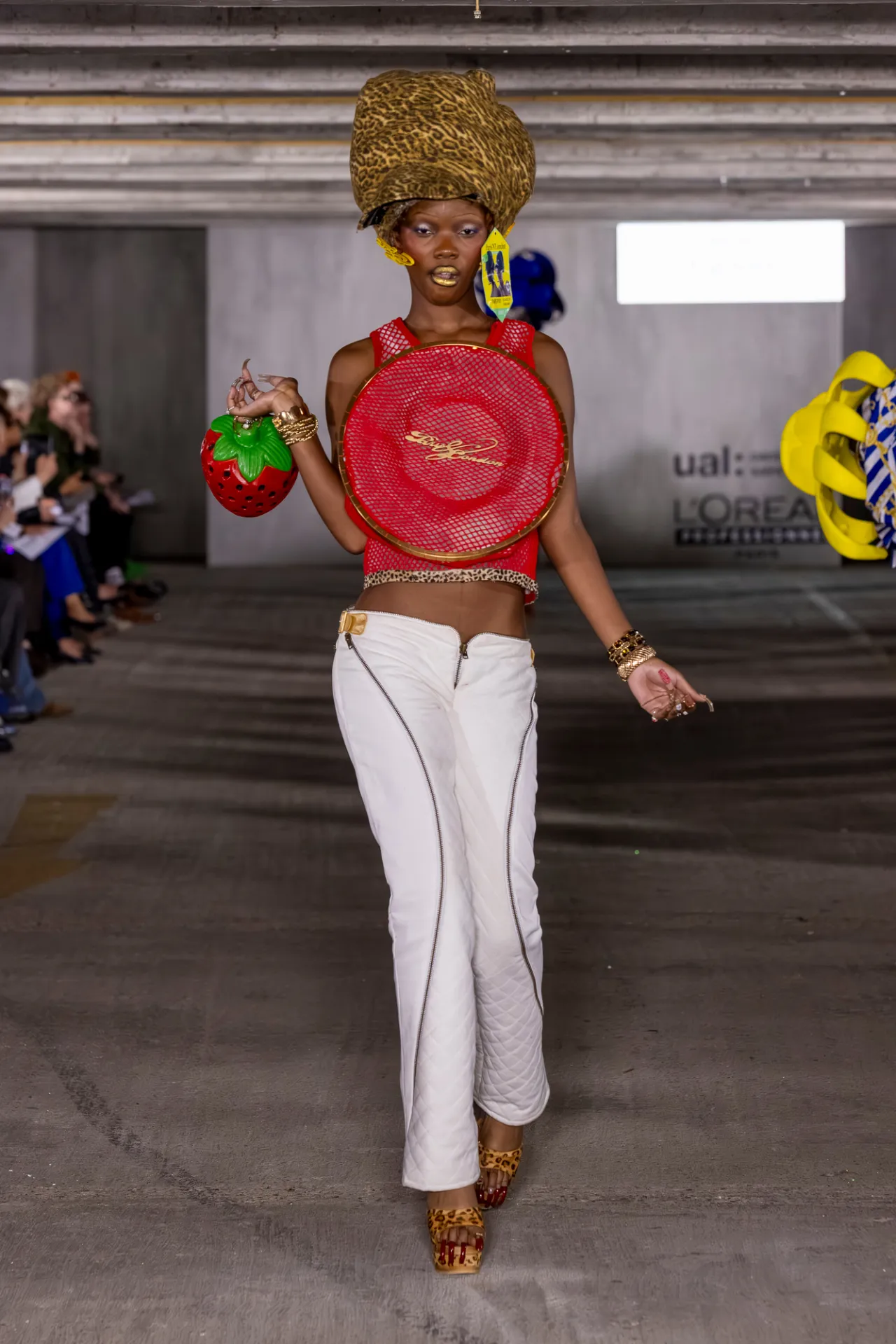
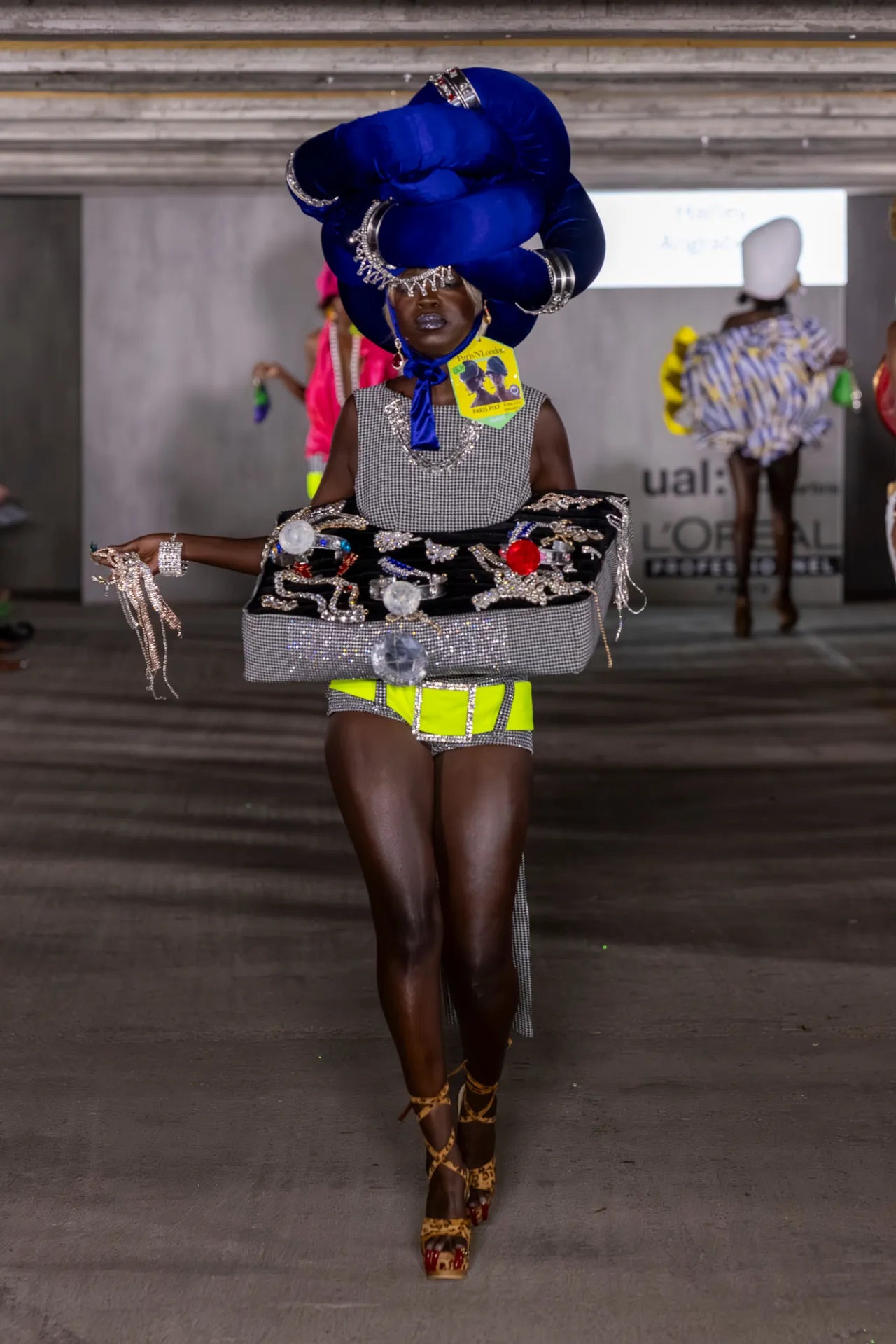
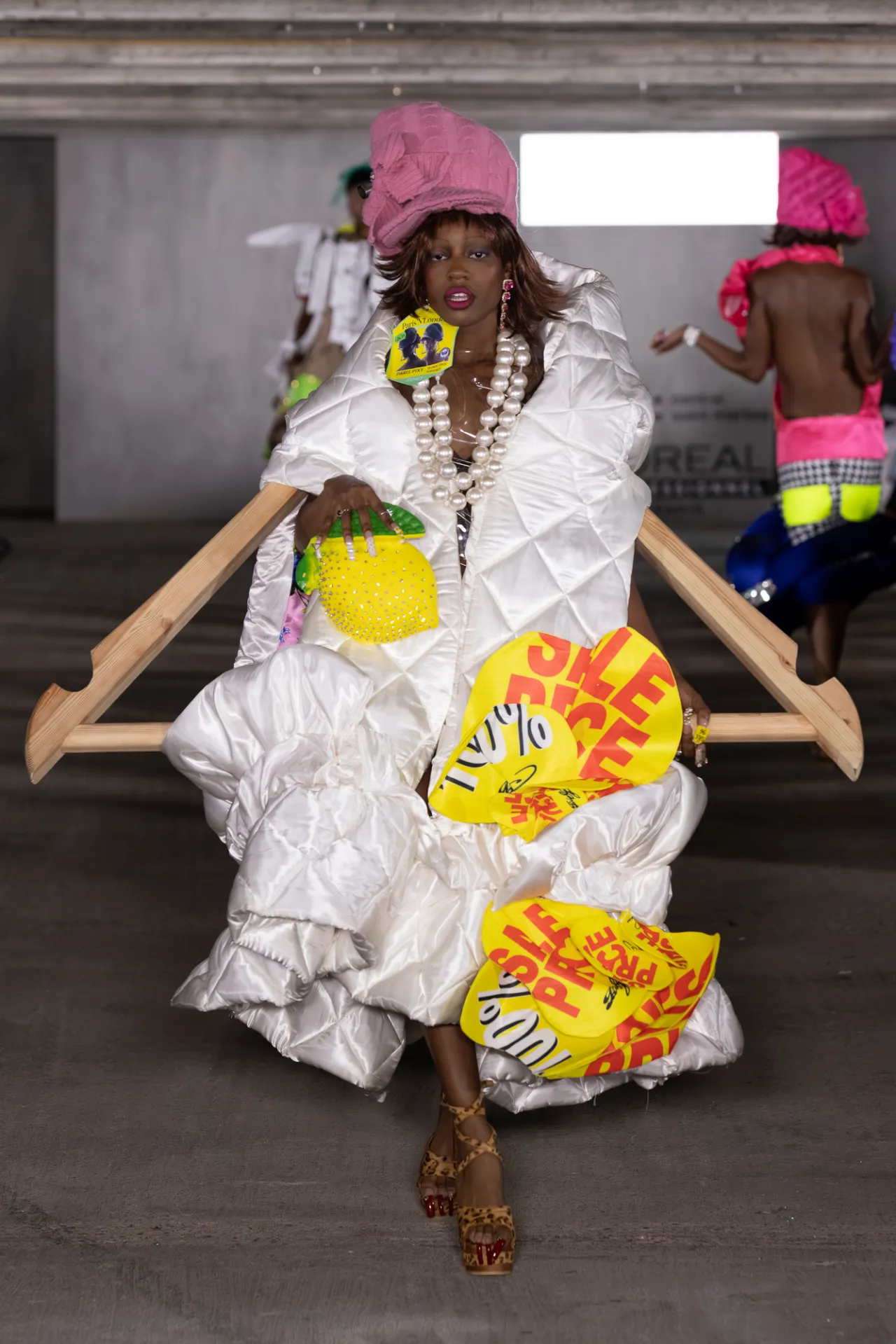
Harley Angrabeit
Harley’s other business and creative half is Cameron Bisseck, who was the second runner-up of the L'Oréal Professionnel Young Talent Award and presented a collection conveying the wish to “create a new vision of black femininity, black womanhood, and black culture.” The clothes took inspiration from Dalston’s Ridley Road Market too but from a diaspora point of view – people, adults, still figuring out life, coming together and creating a community for others to join. Deconstructed garments and an exceptionally wide pannier à la 1770s cour de Versailles made up a collection that integrated culture in everyday life.
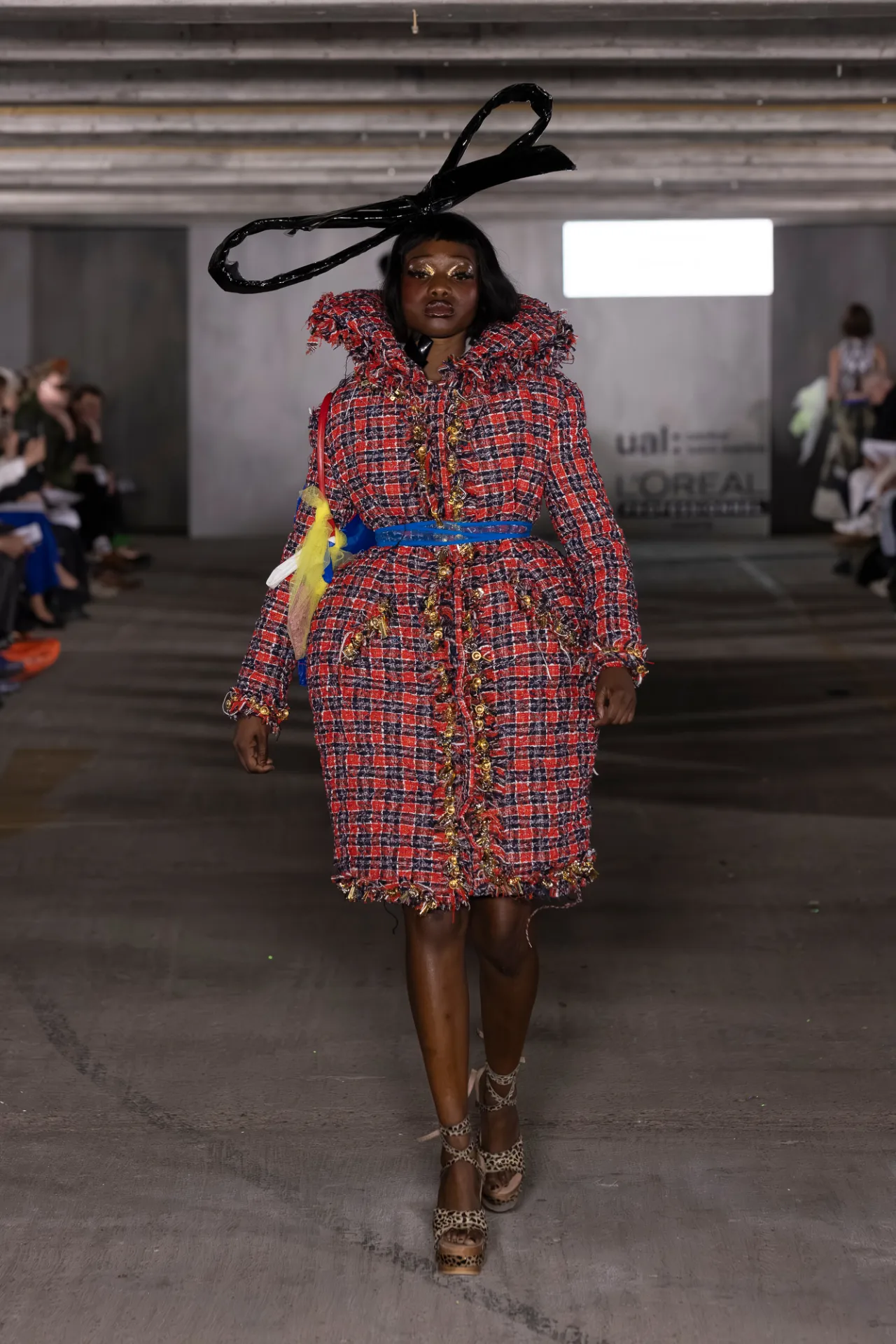
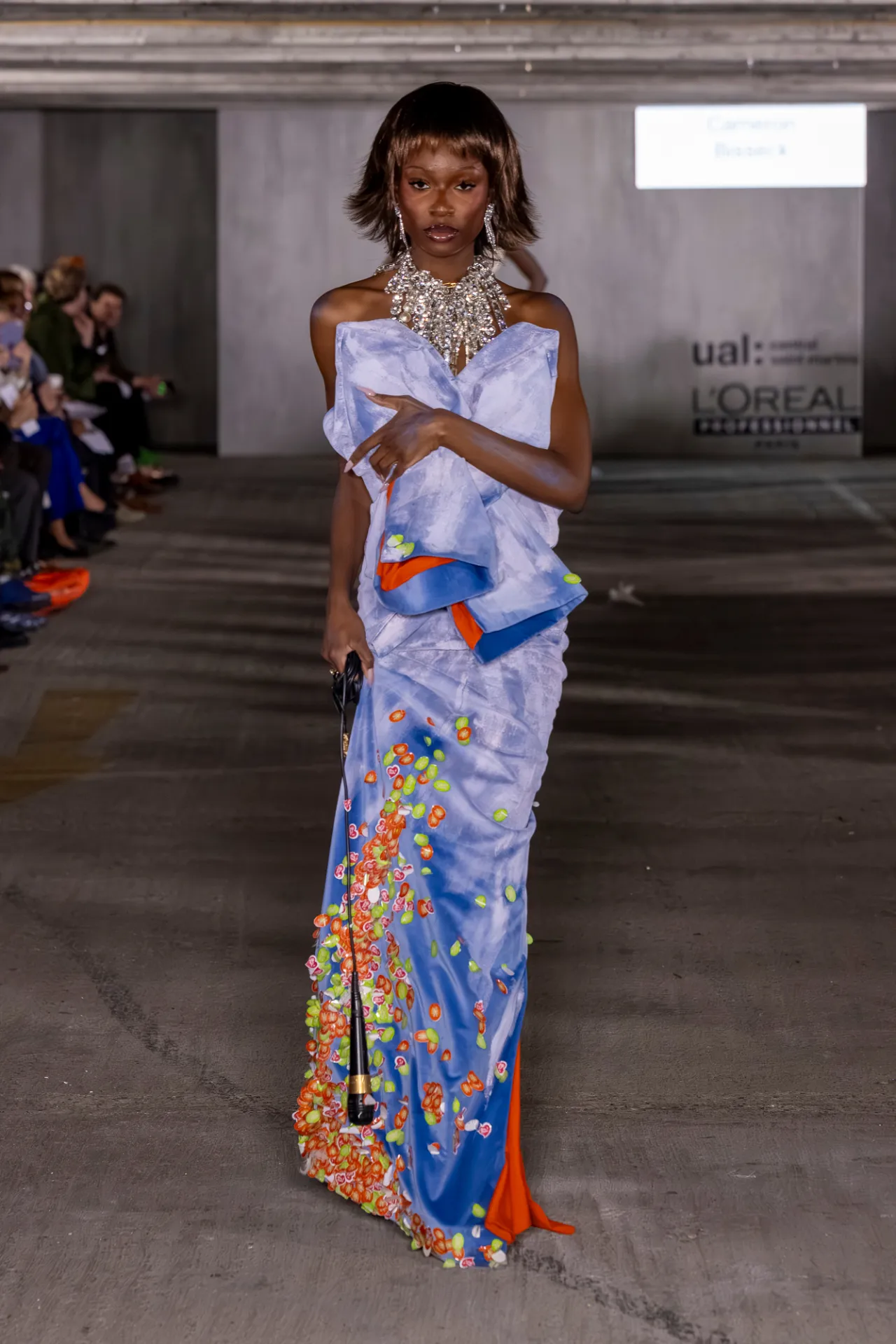
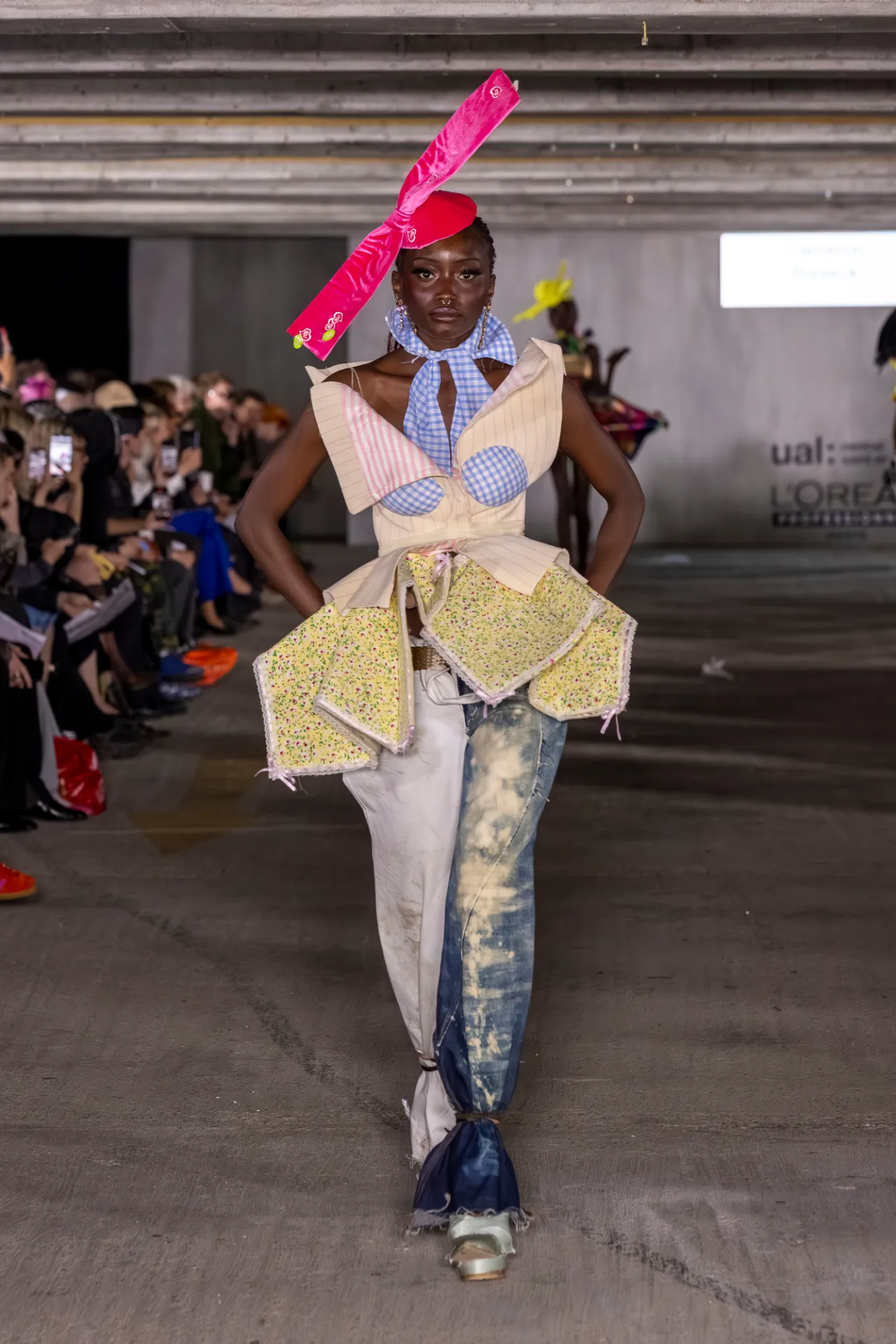
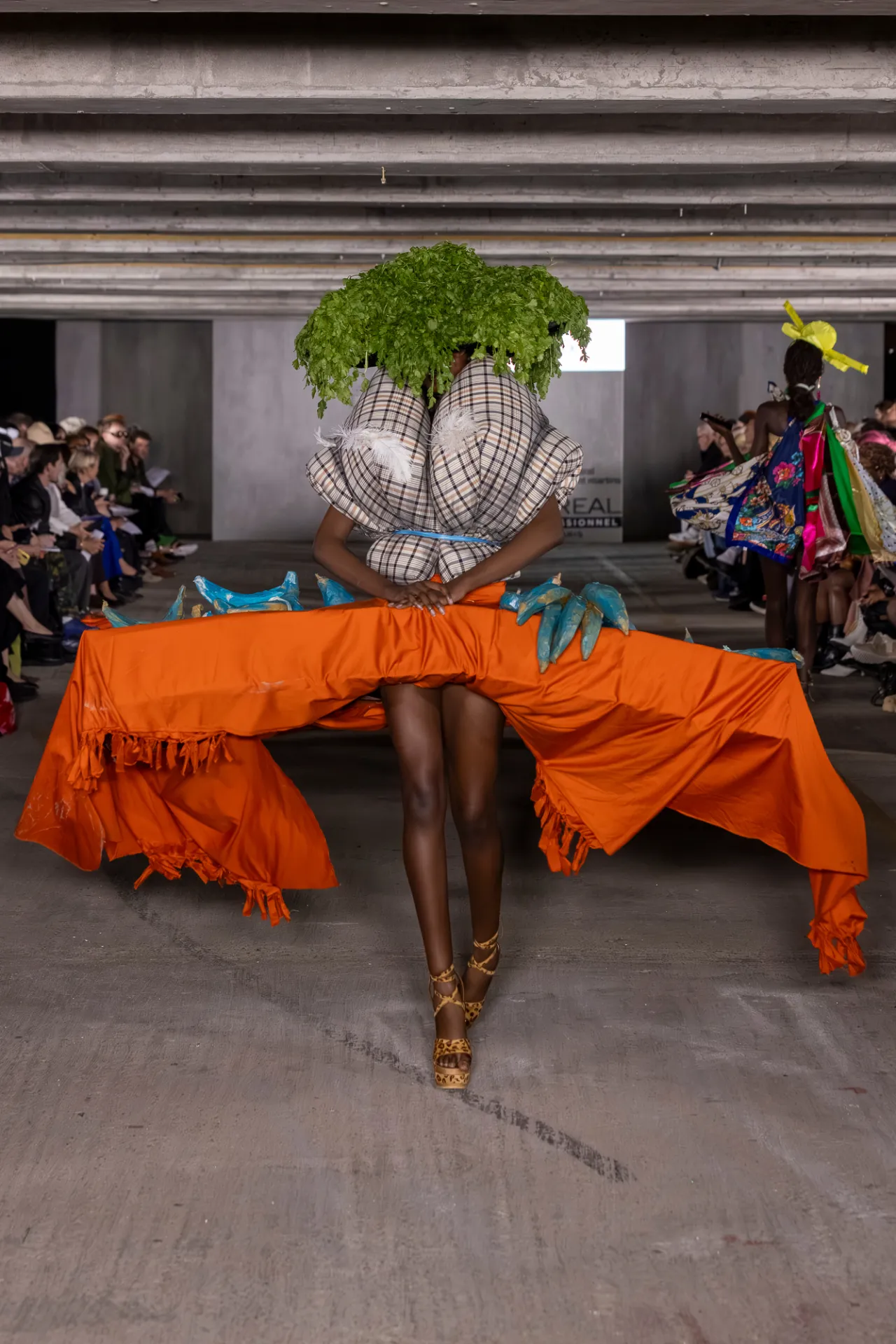
Cameron Bisseck
We then had Dai Zhujing and Matteo Dunkley, who showed two very different collections. The former’s collection, The Best Age, mixed Dai’s experiences of growing up between a textile manufacturing town in China and spending her teen years embedded in the US’s culture, which translated into factory culture, animations and oversized tools on the runway. Unlike Yuki Naka’s collection, here, childhood memories are vivid and joyful.
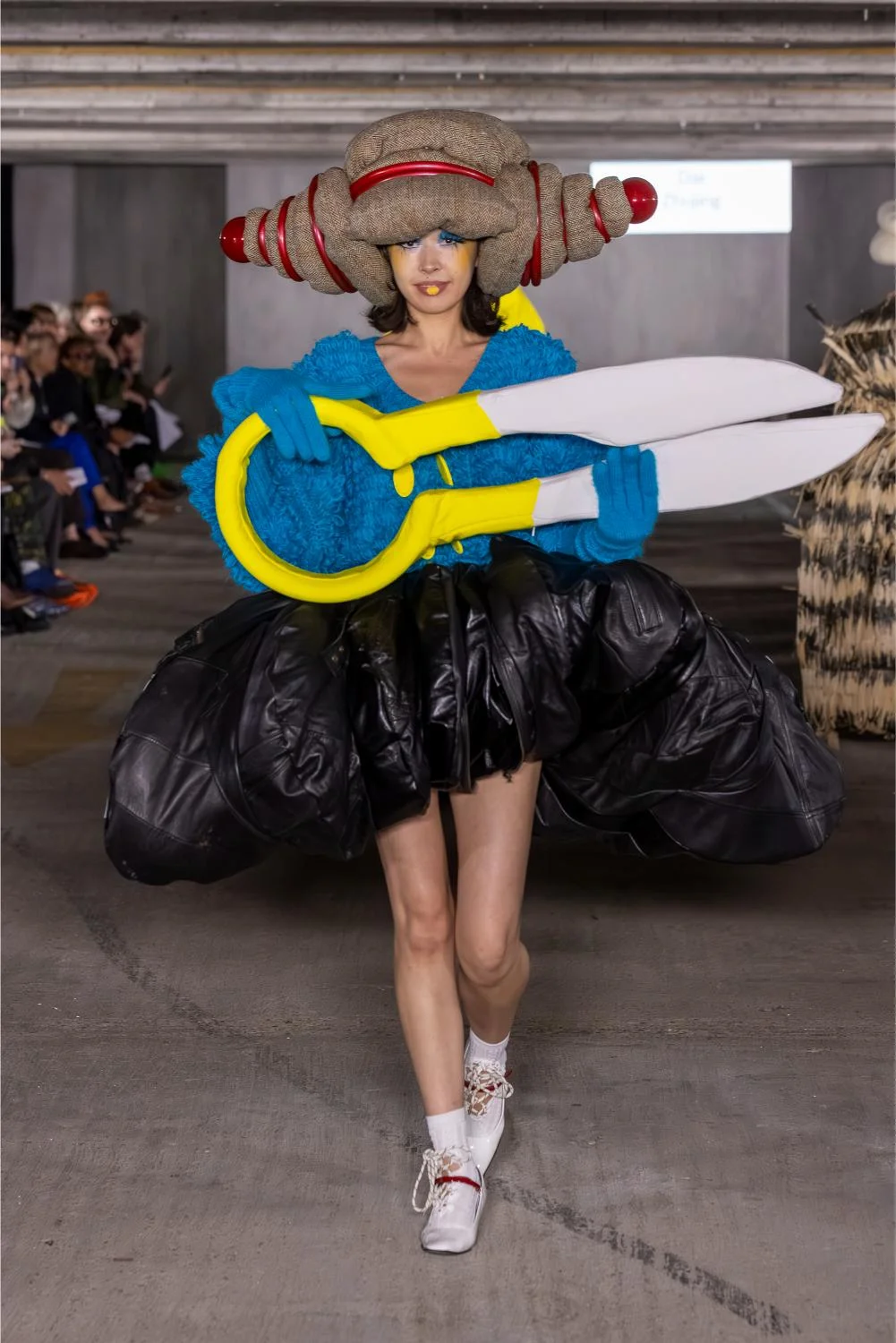
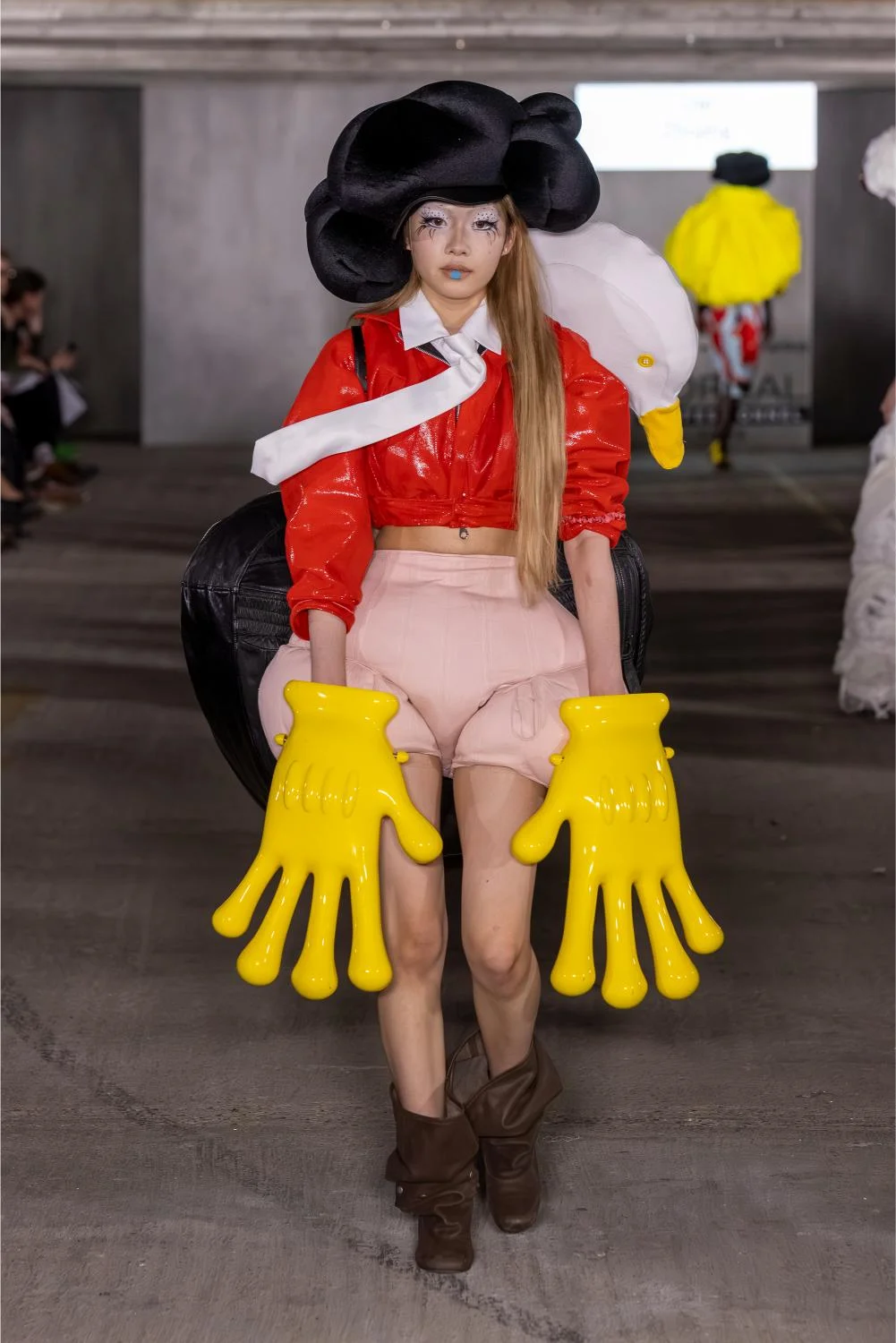
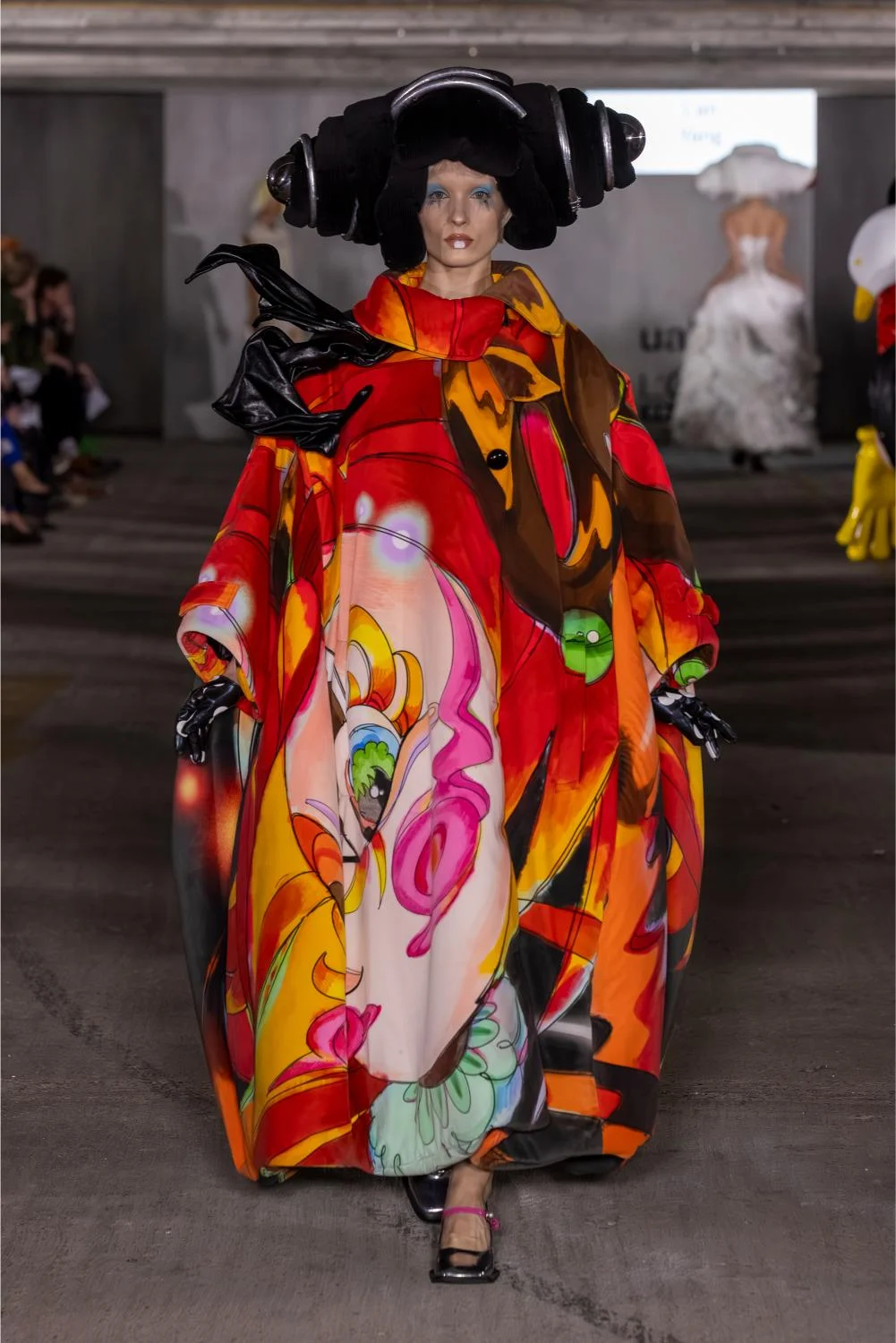
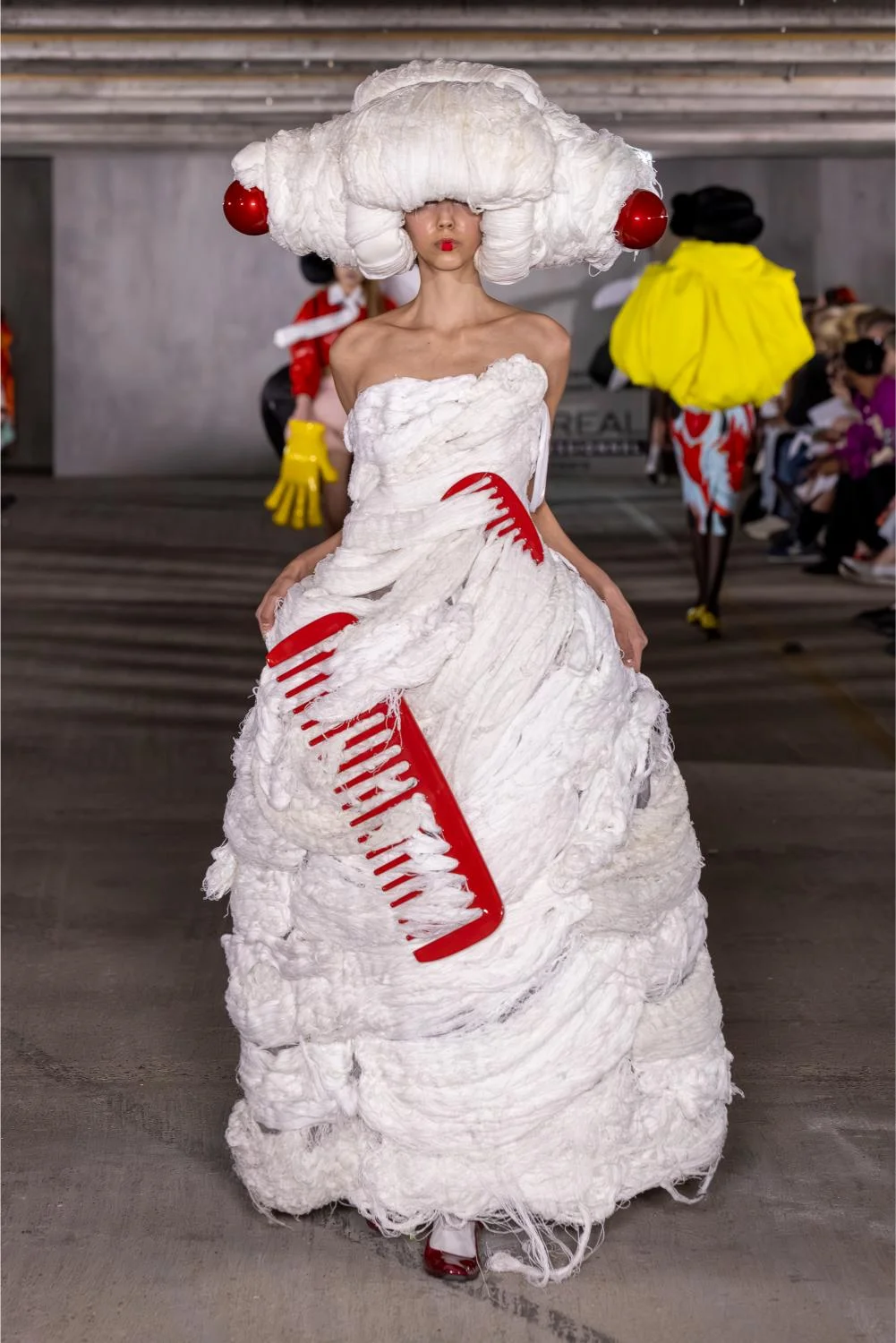
Dai Zhujing
Dunkley’s collection, on the other hand, was more subdued. A student of Fashion Knitwear, he created a technique in which he seamlessly melts pellets of wax into knit with an iron, creating malleable fabric which dries down in a structured shape. The colours of the collection were very earthy and calming, in contrast with the sharp corners of the clothes which, nonetheless, resulted in a very wearable collection.
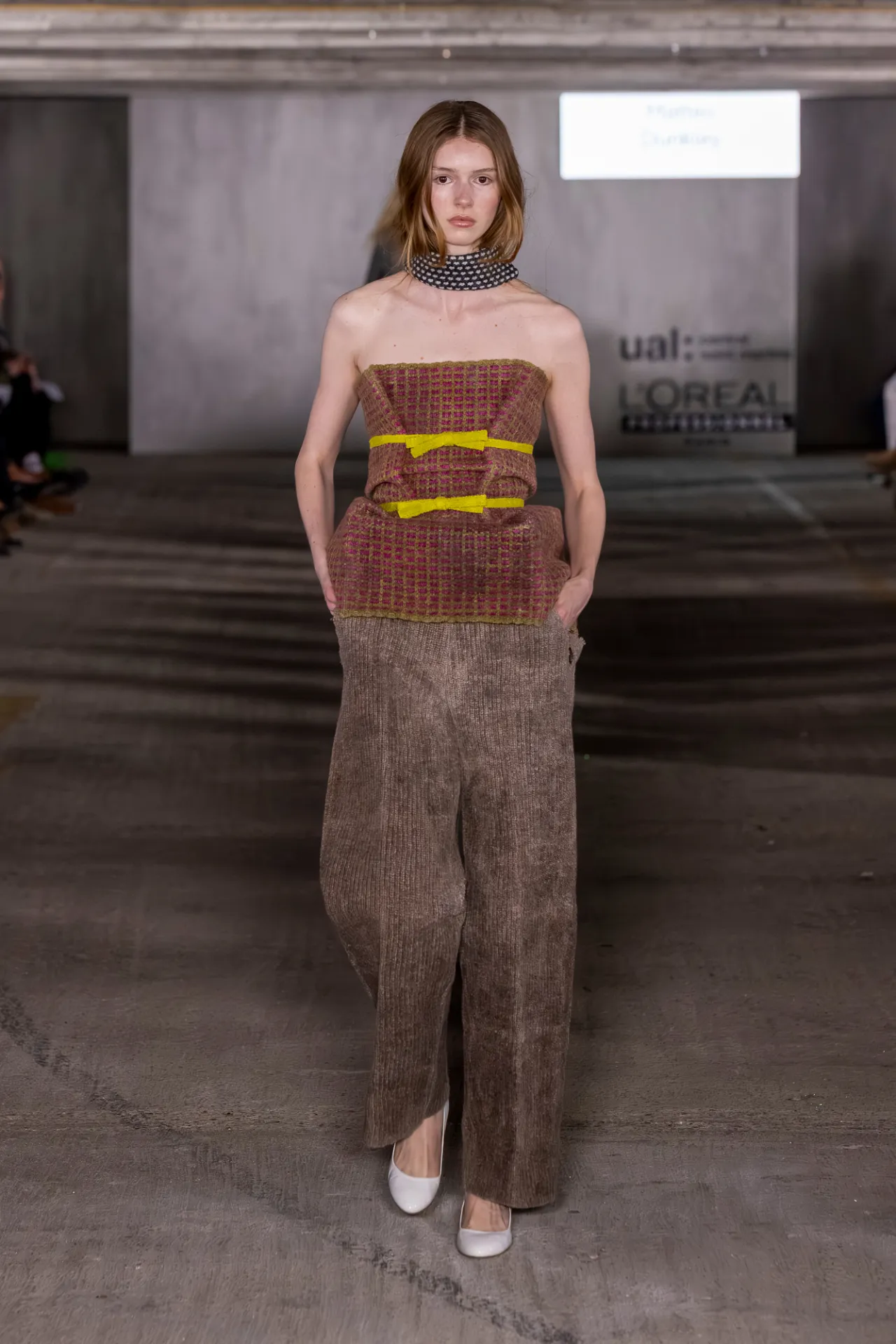
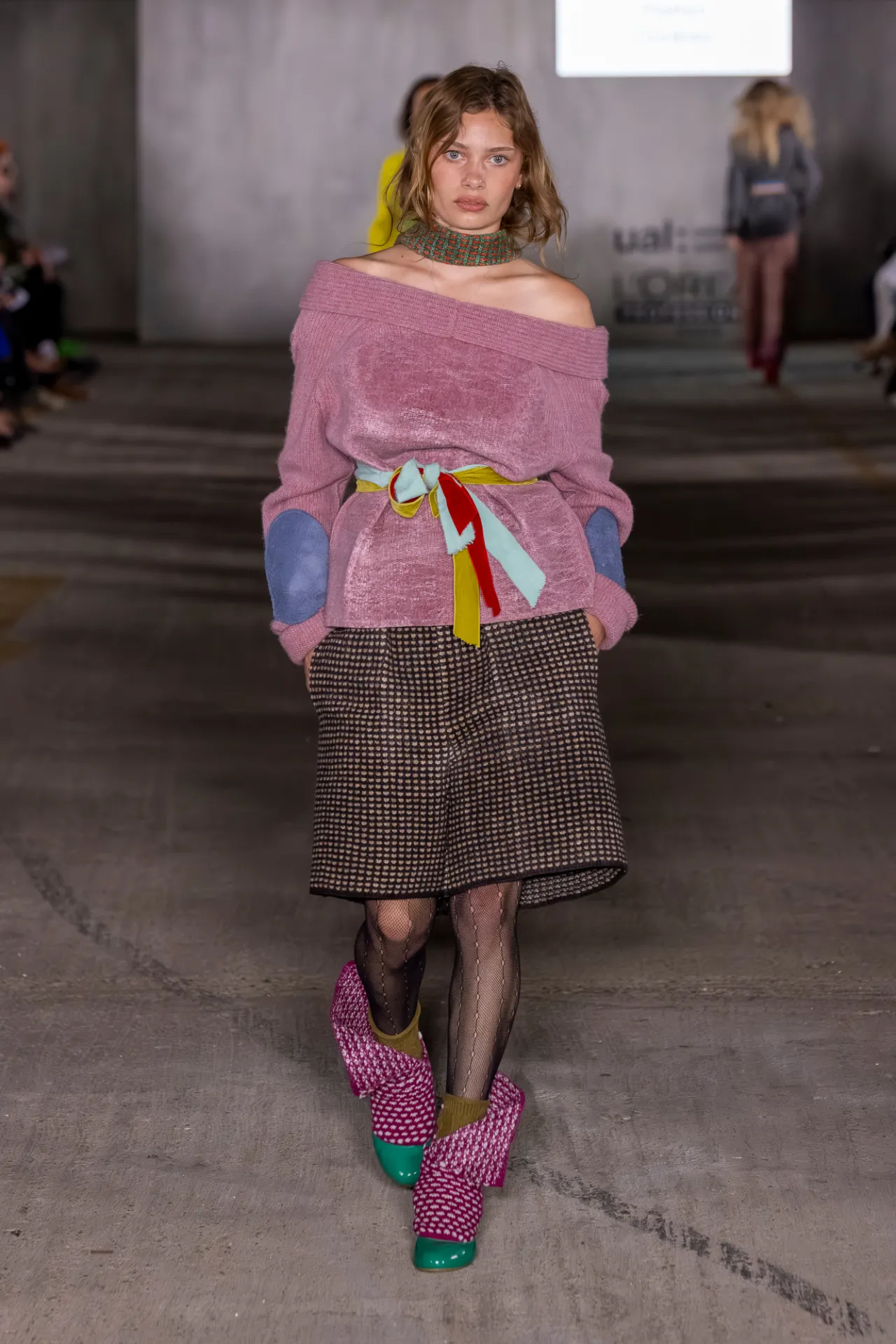
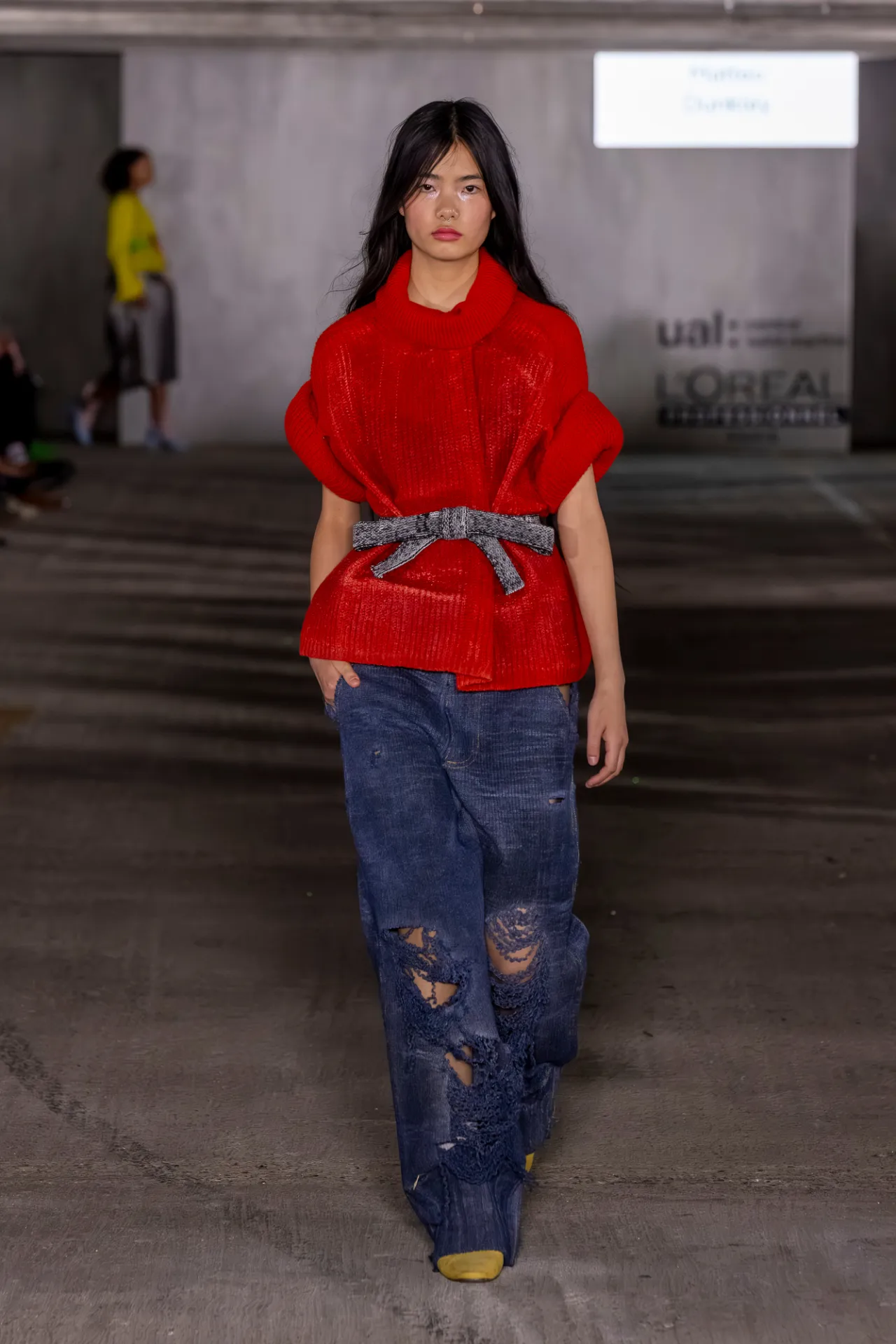
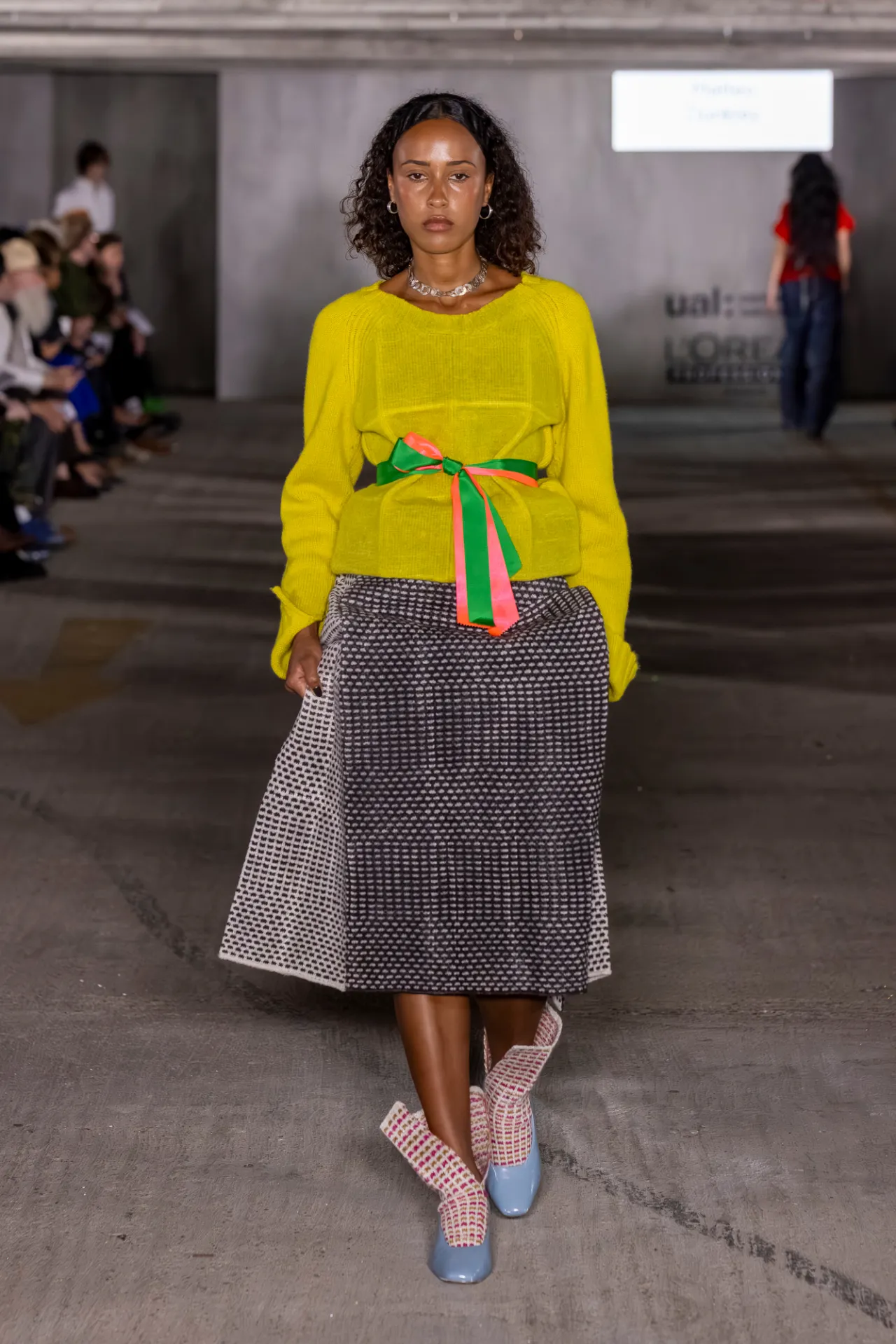
Matteo Dunkley
Another, personally, wearable collection was shown by Lorcan Wigg, who used shearling, wool, organza, and recycled materials for a series that was aggressive and at the same time soft and deeply romantic. There was a sense of rawness and passion in the stitches and mismatched (but not really) fabrics that composed the garments.
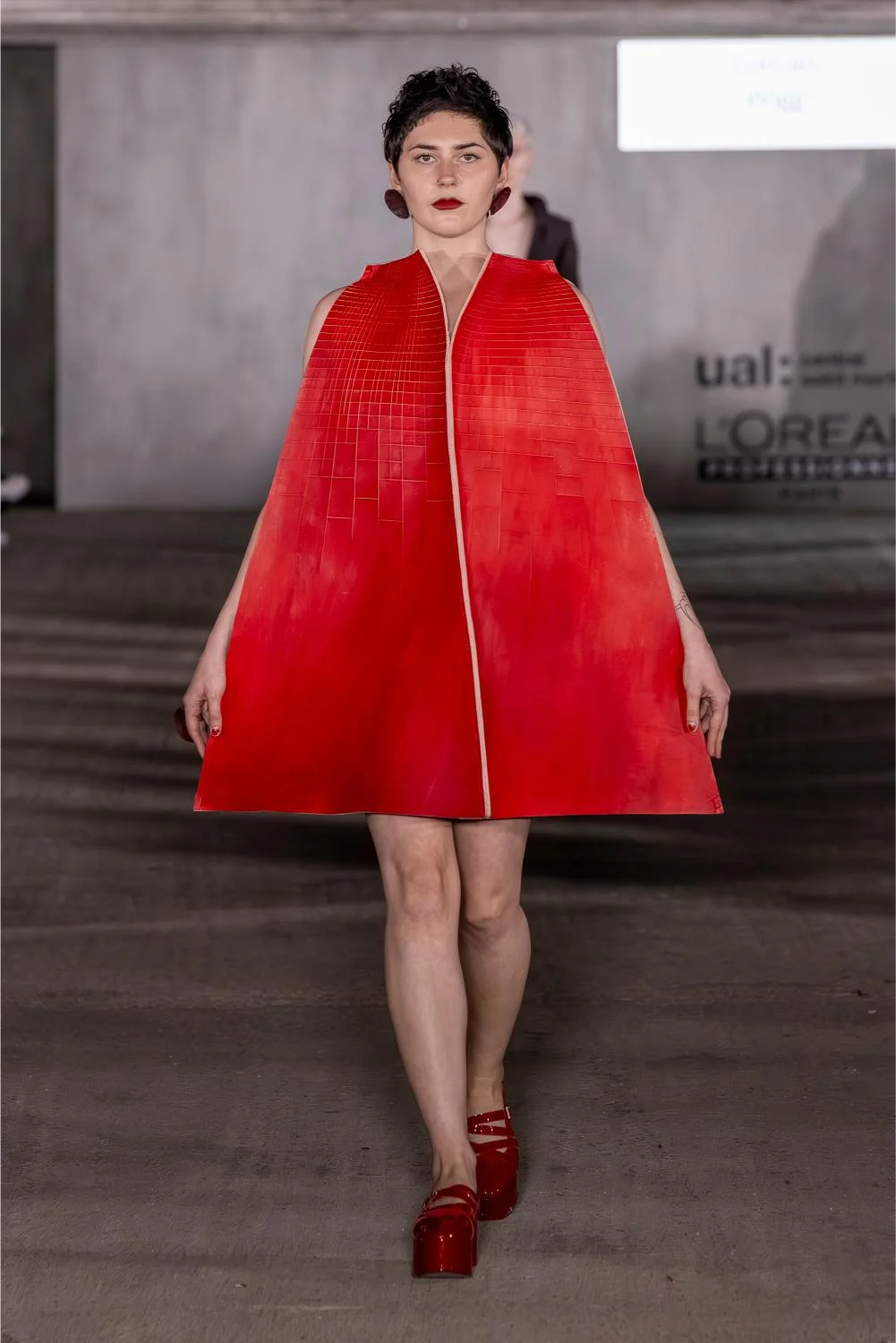
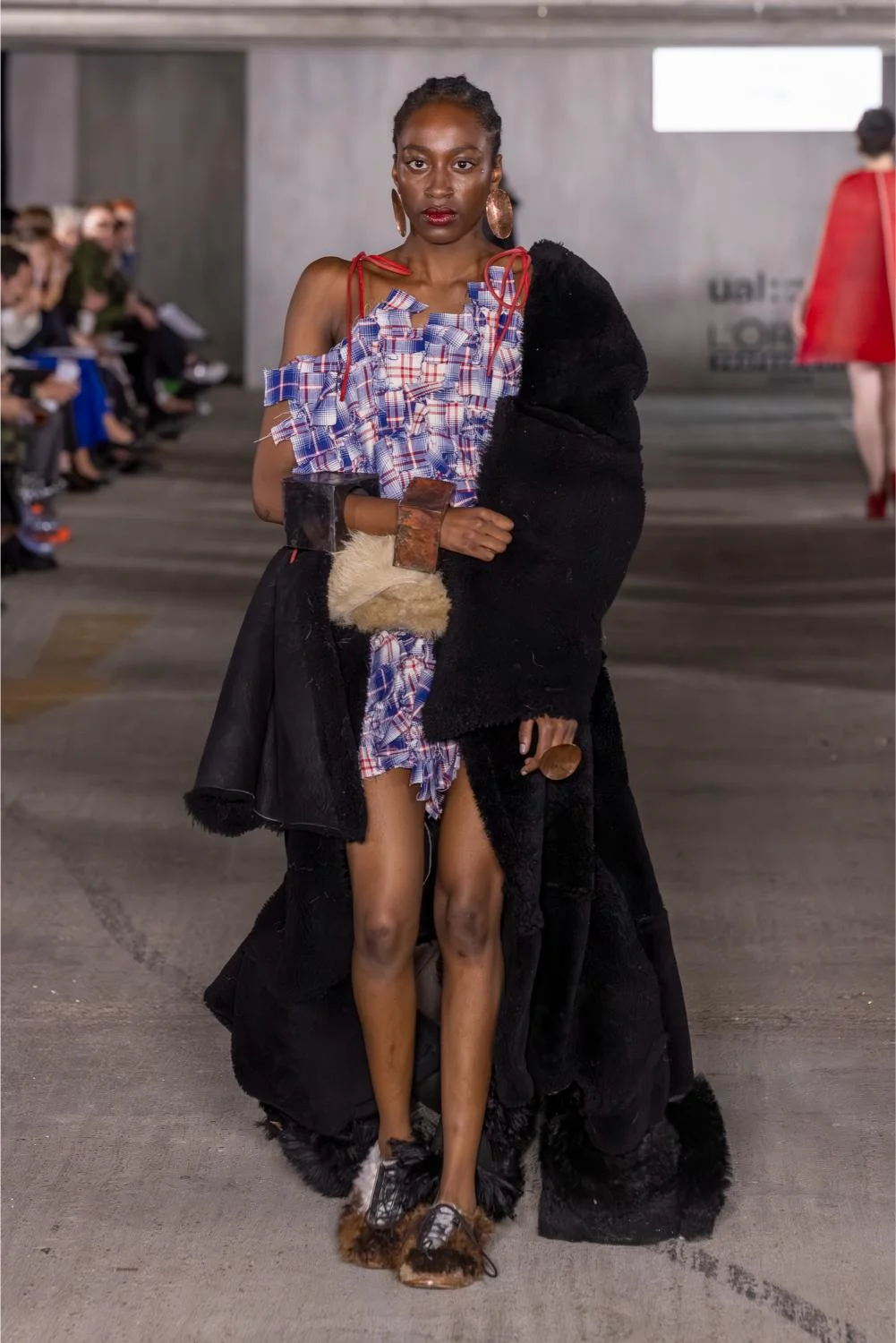
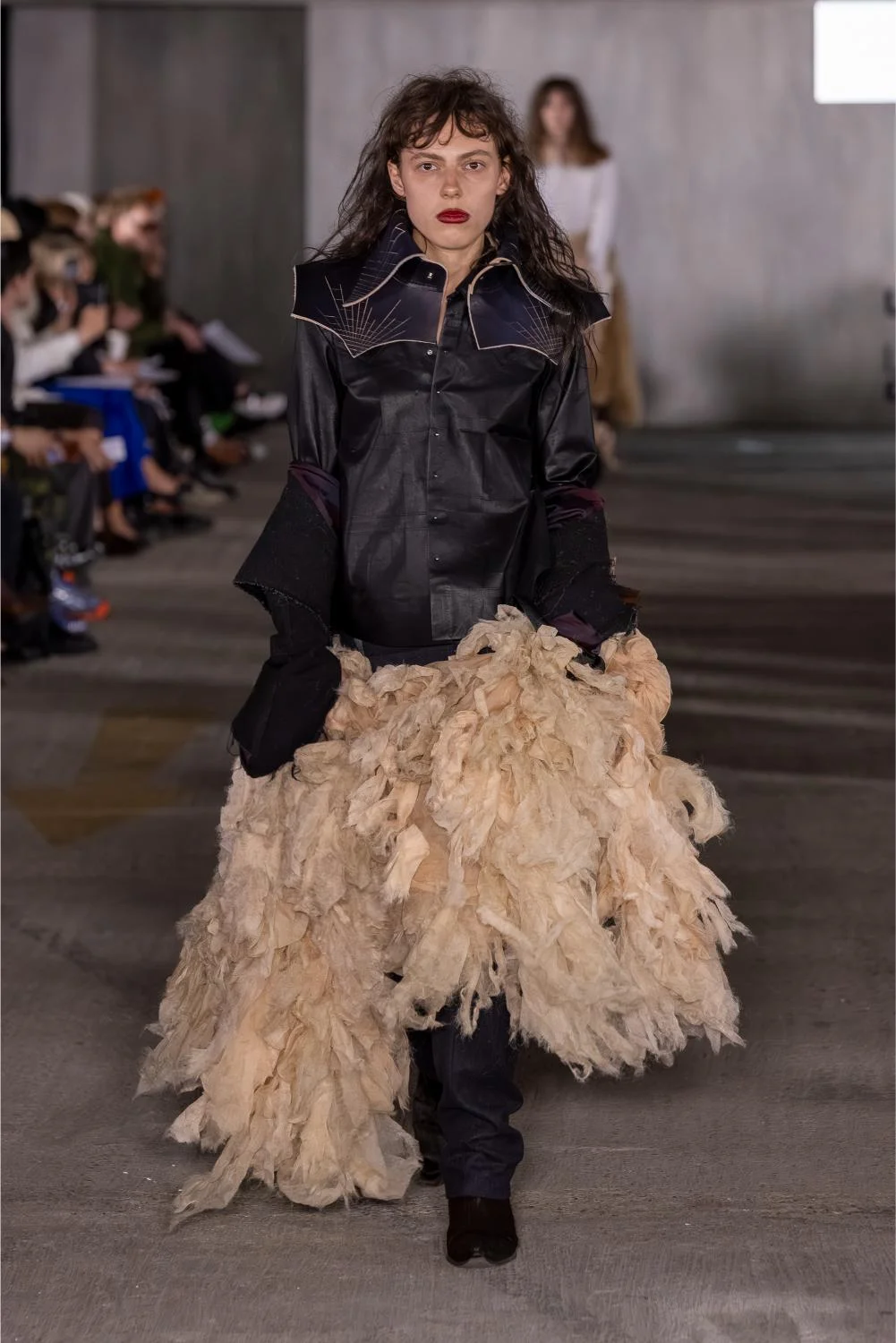
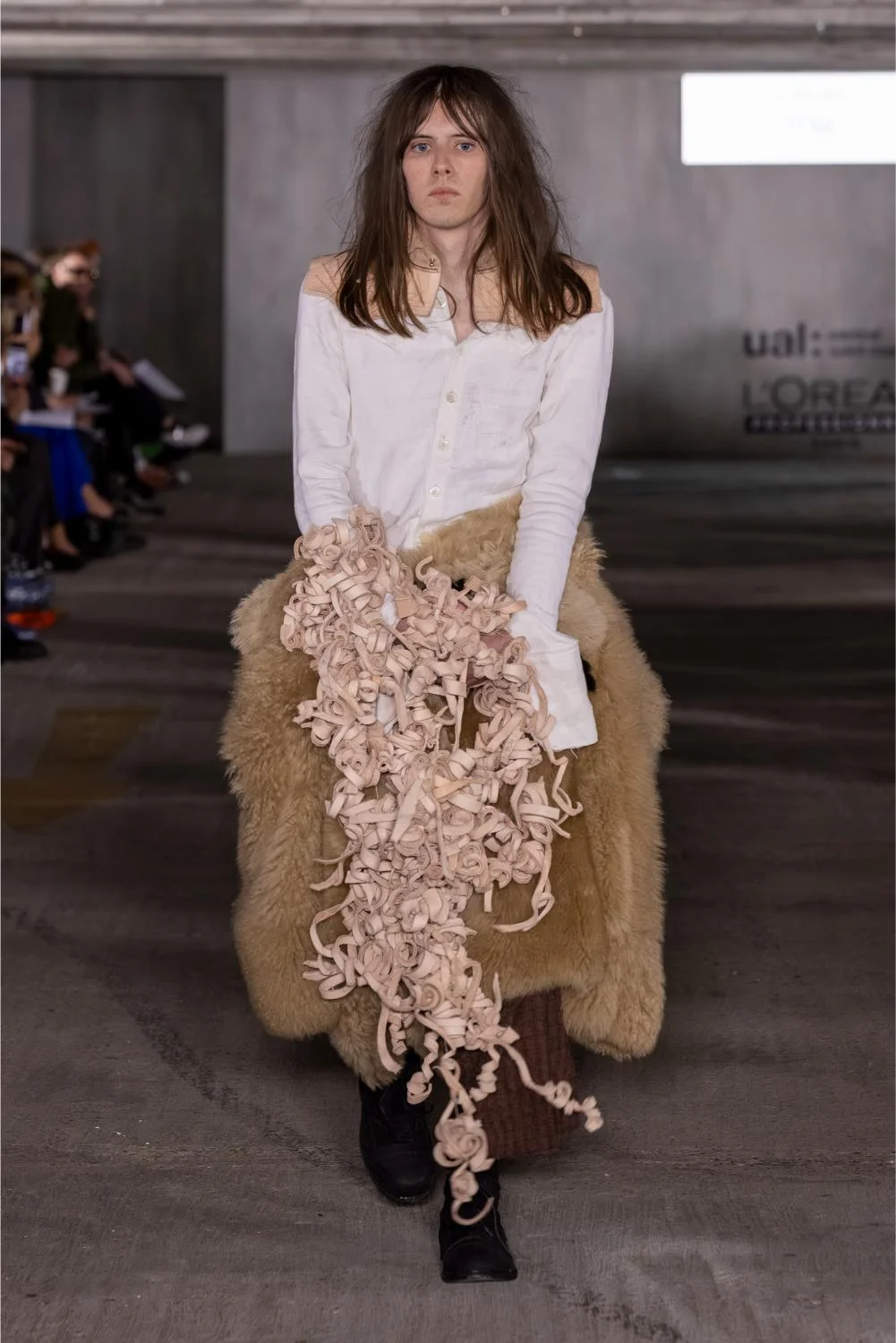
Lorcan Wigg
Giacomo Goattin, on the other hand, presented rigid and heavy pieces in scapegoat which, based on their experience, inquired the pressure and brutality inflicted on trans bodies. The bodices and silhouettes were in a tug of war, pulling and freeing and constricting the bodies of the models. The neutral colours put the emphasis on the structures and the struggles within the constructions, while the climax of the collection came in the final piece, where one model hoisted another inside what looked like a millstone.
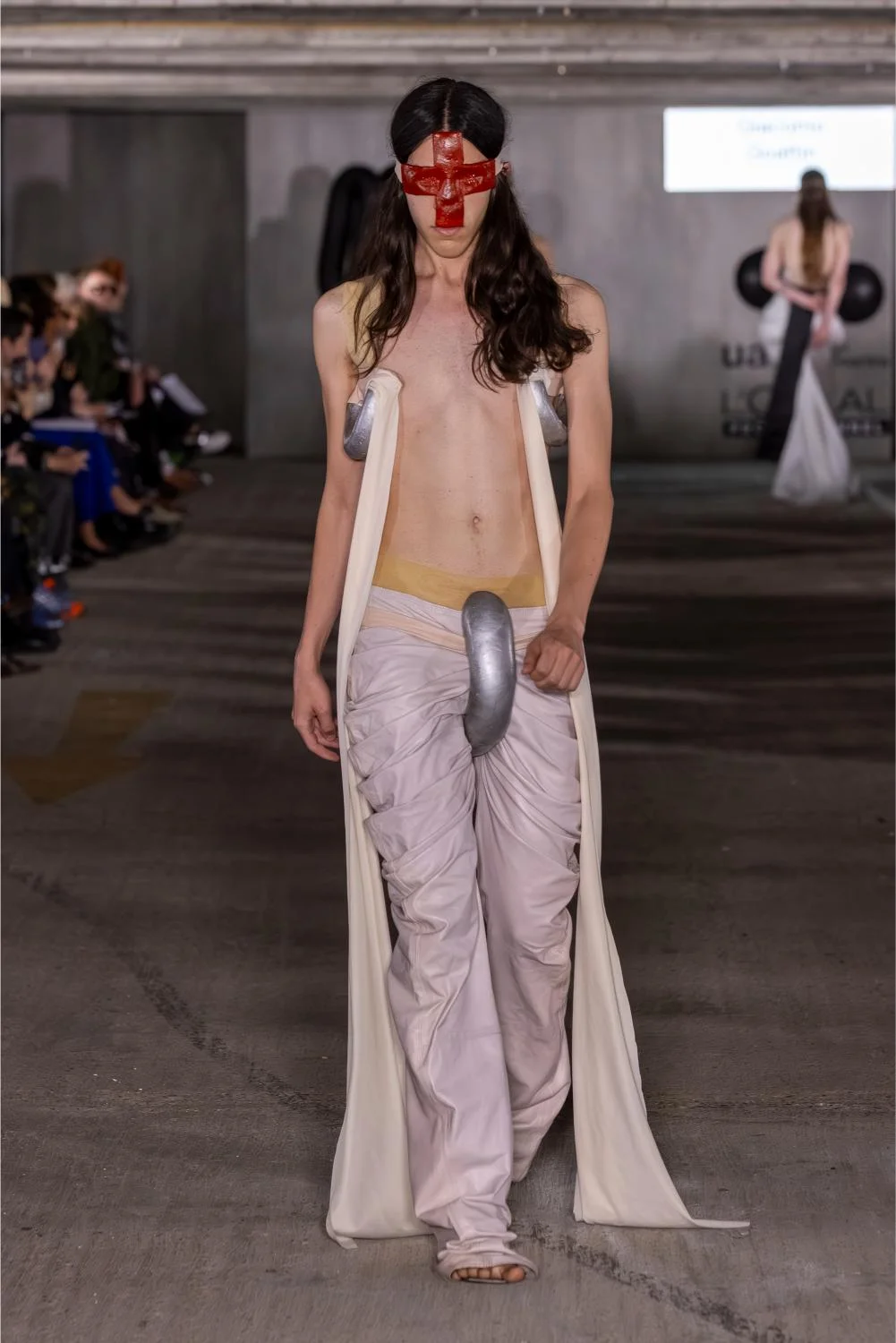
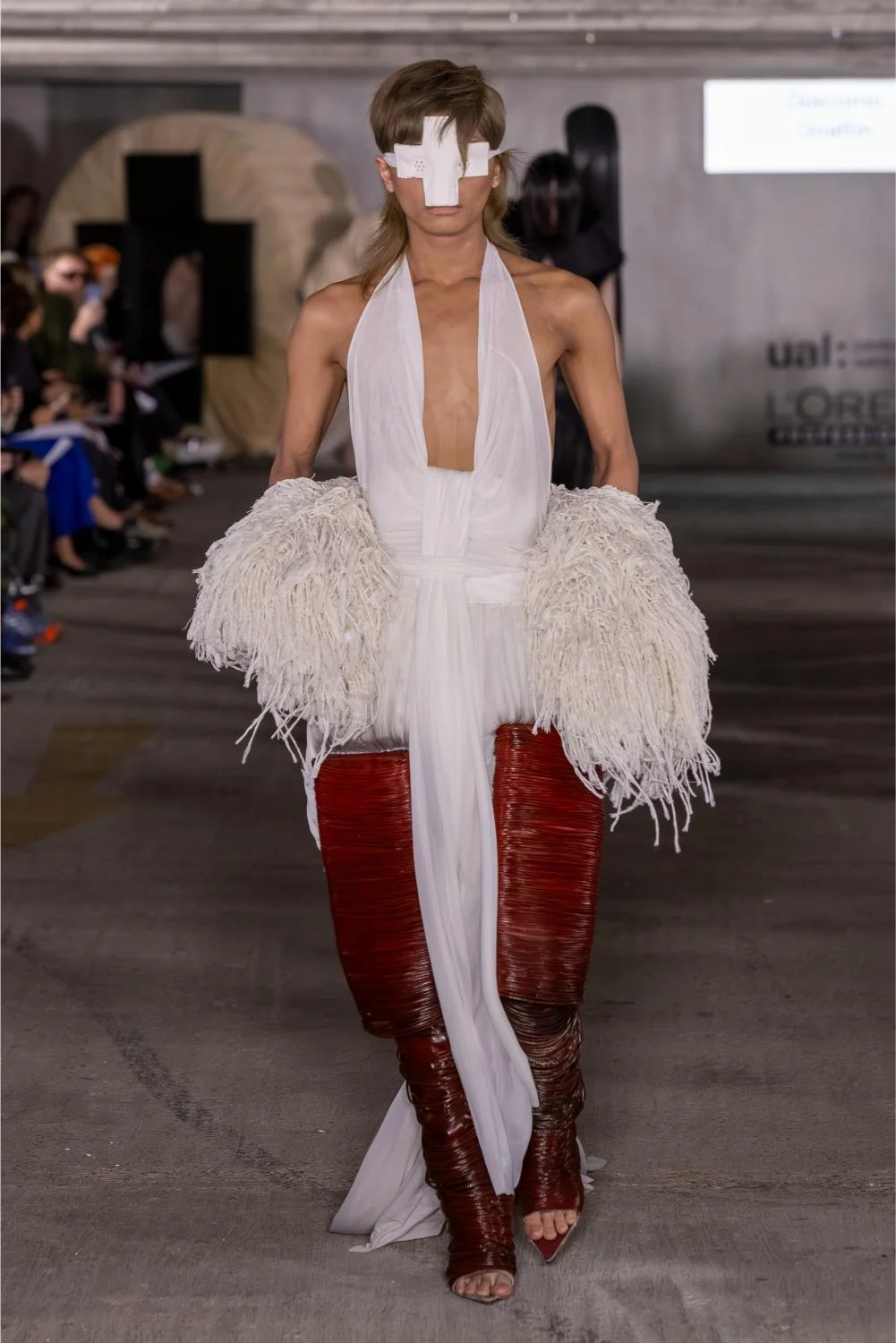
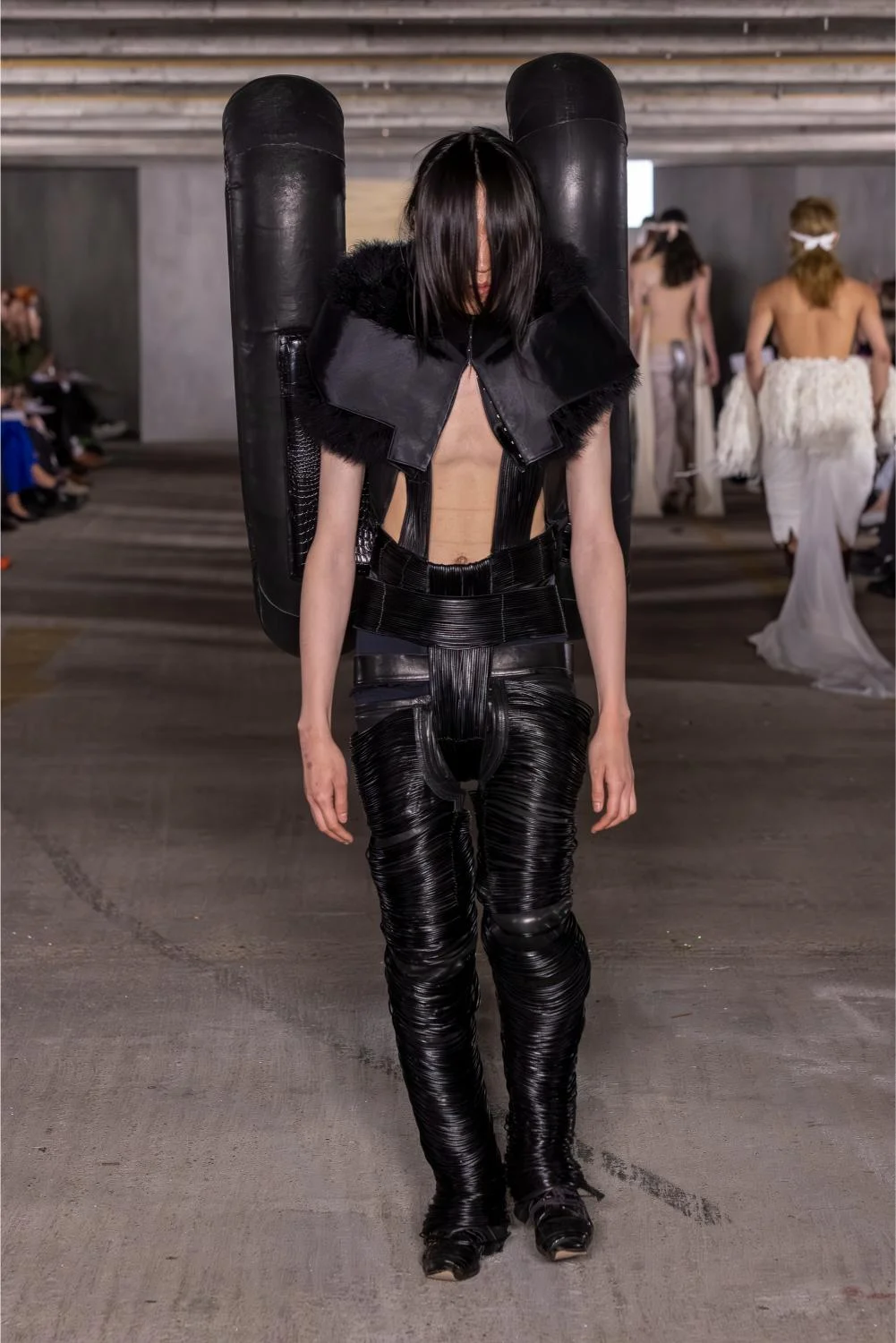
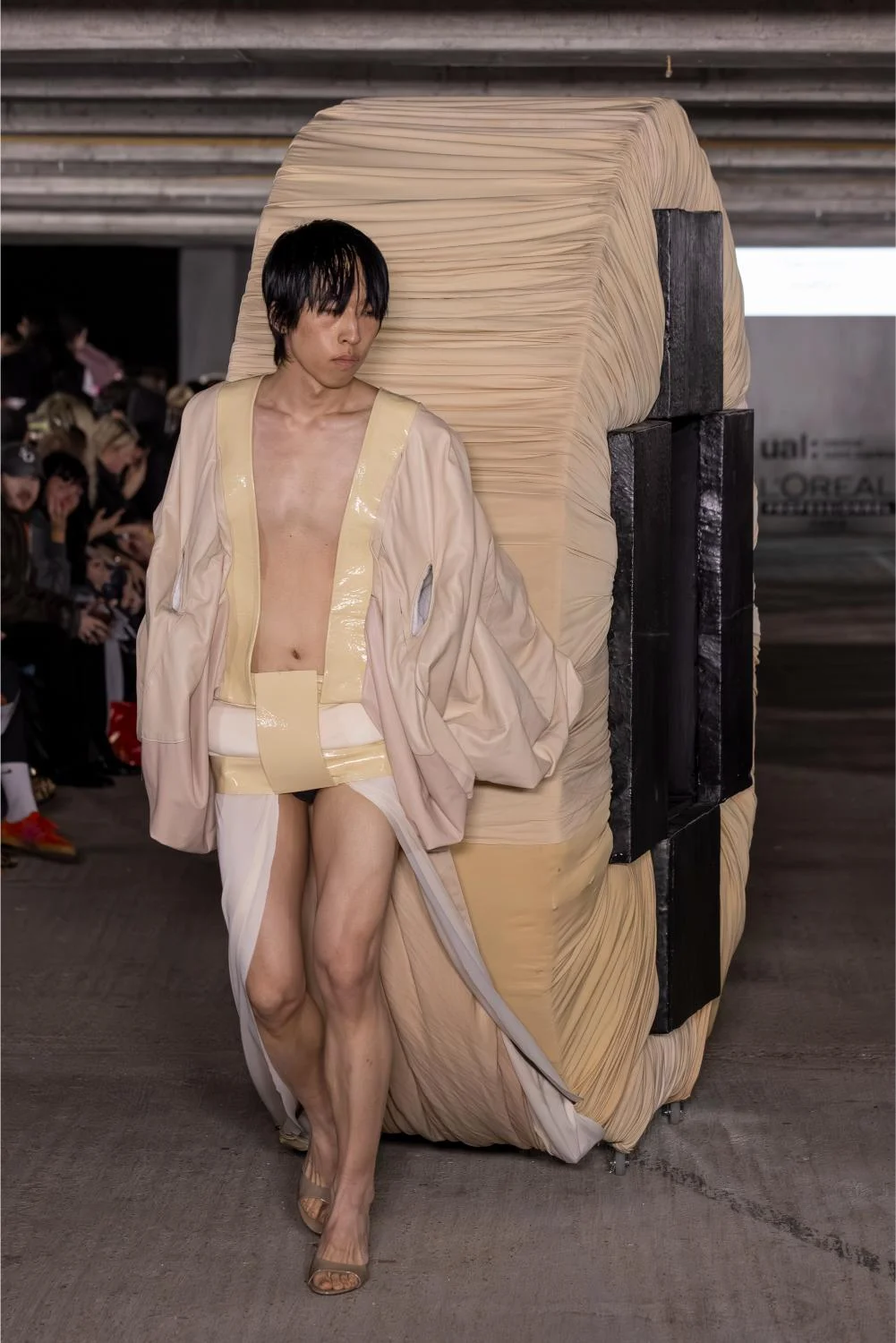
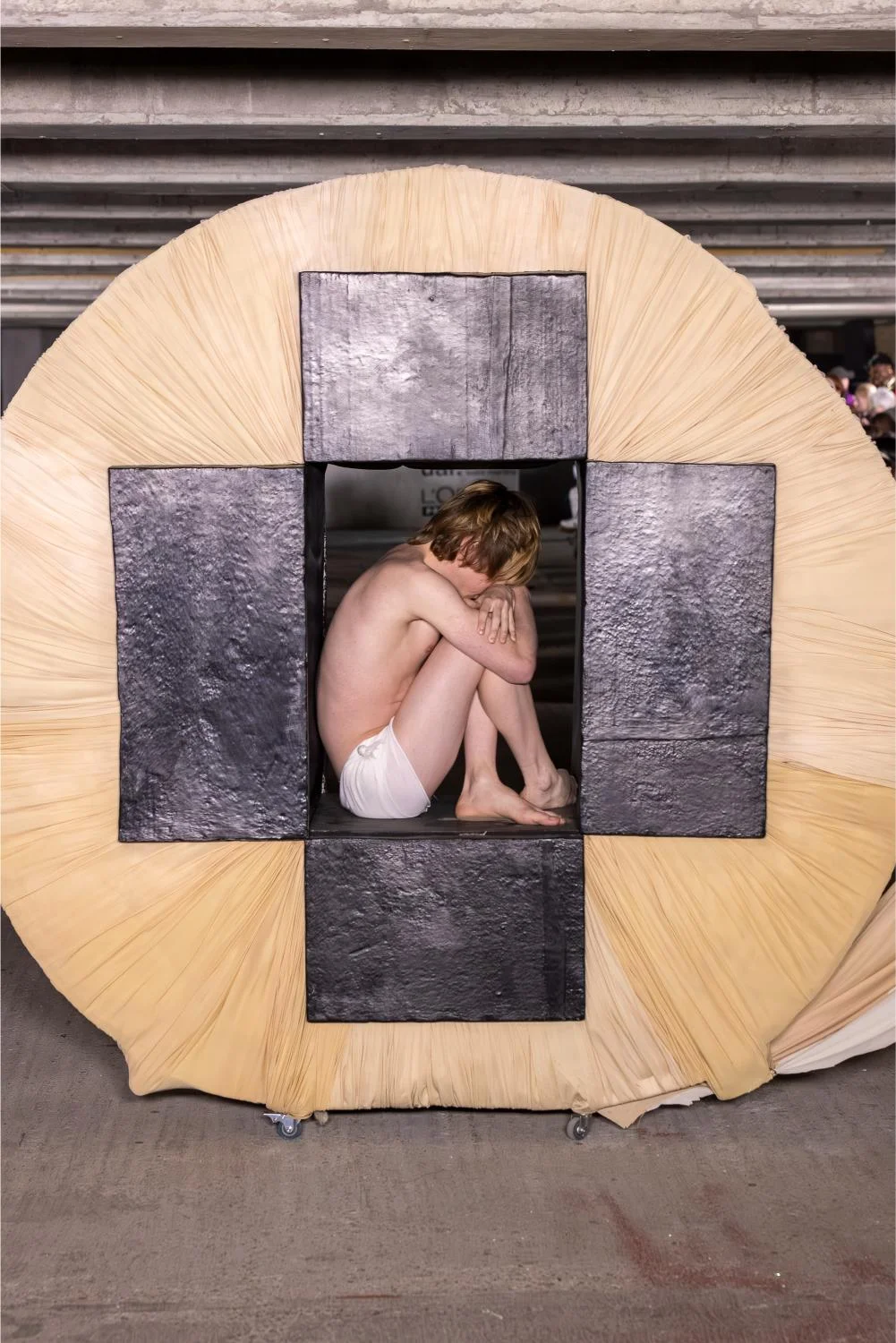
Giacomo Goattin
Julia O’Callaghan’s collection explored the body too, but from the perspective of a voyeuristic male narrator who likes to belittle women. The clothes included lingerie and fetishwear, reclaiming their freedom from the man's gaze through the choice of materials, such as welded steel, leather and wax – hard to the touch and stiff. These were mixed with more flowing materials like mesh and chiffon embellished with embroideries, leaving the audience intrigued and the models looking like warriors.
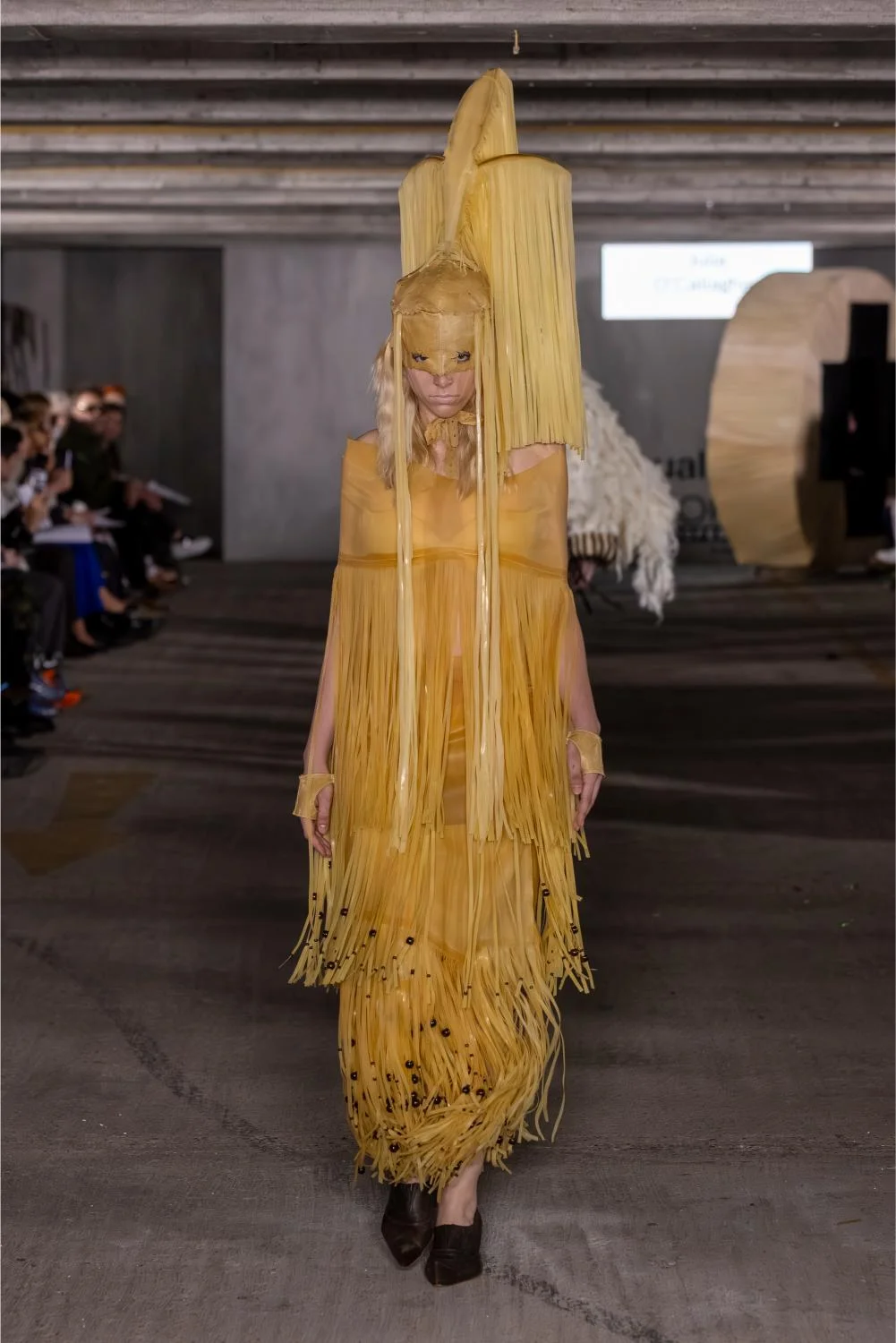
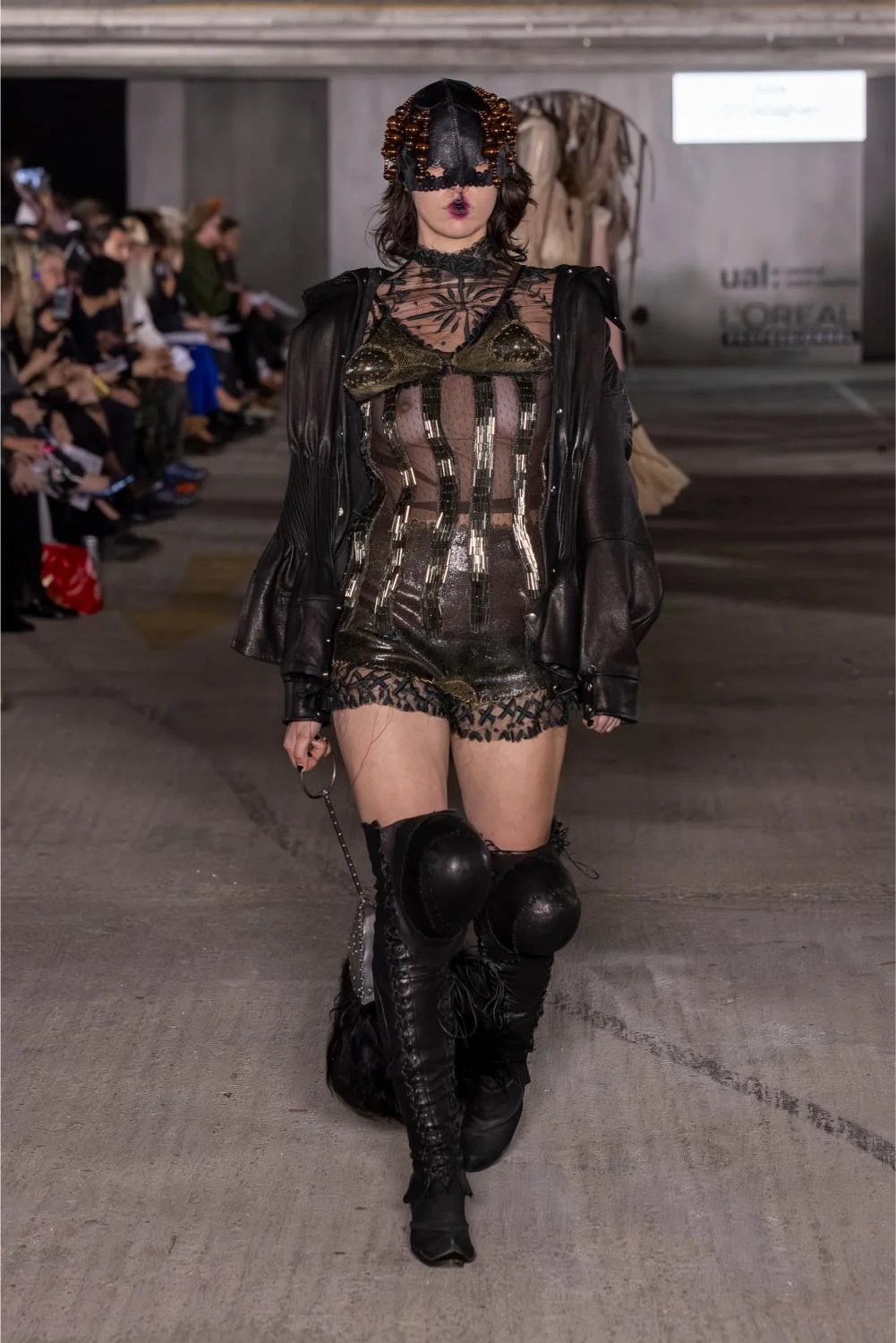
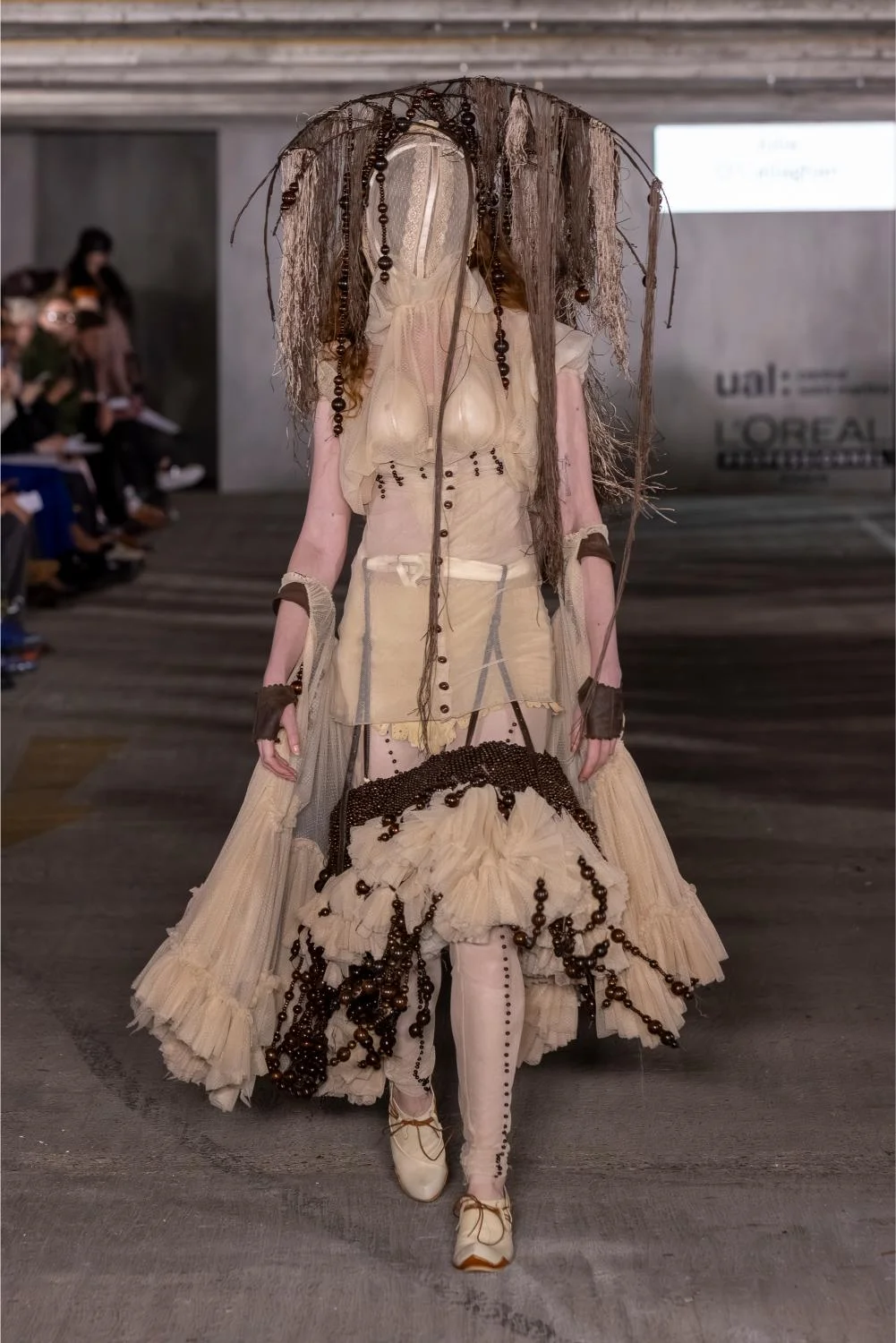
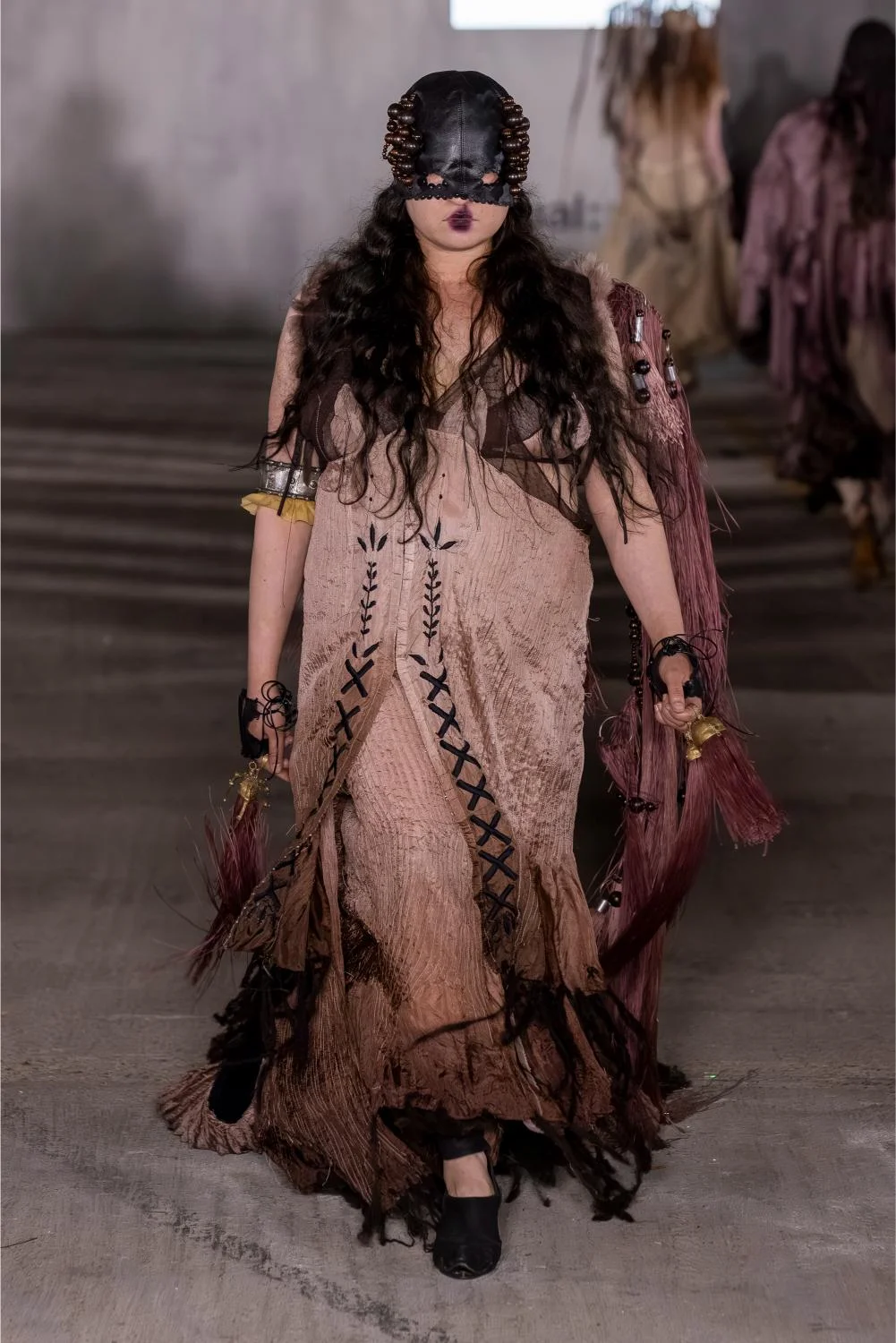
Julia O’Callaghan
One of the last collections was that of Sophia Layk, who, via Thomas Hardy’s The Woodlanders, explored the grief of losing her mother and transformations in Postscript. The loss was symbolised by the volume of the pieces and the transformations by the zero-waste techniques employed. For instance, willow, one of the collection's main material components, was soaked to create tension plate structures, allowing Sophia to avoid using glue in the construction process. As she explained: “Willow is representative of mourning and transformation, and in this collection, it was a way that I could integrate rural English landscapes into garments.”
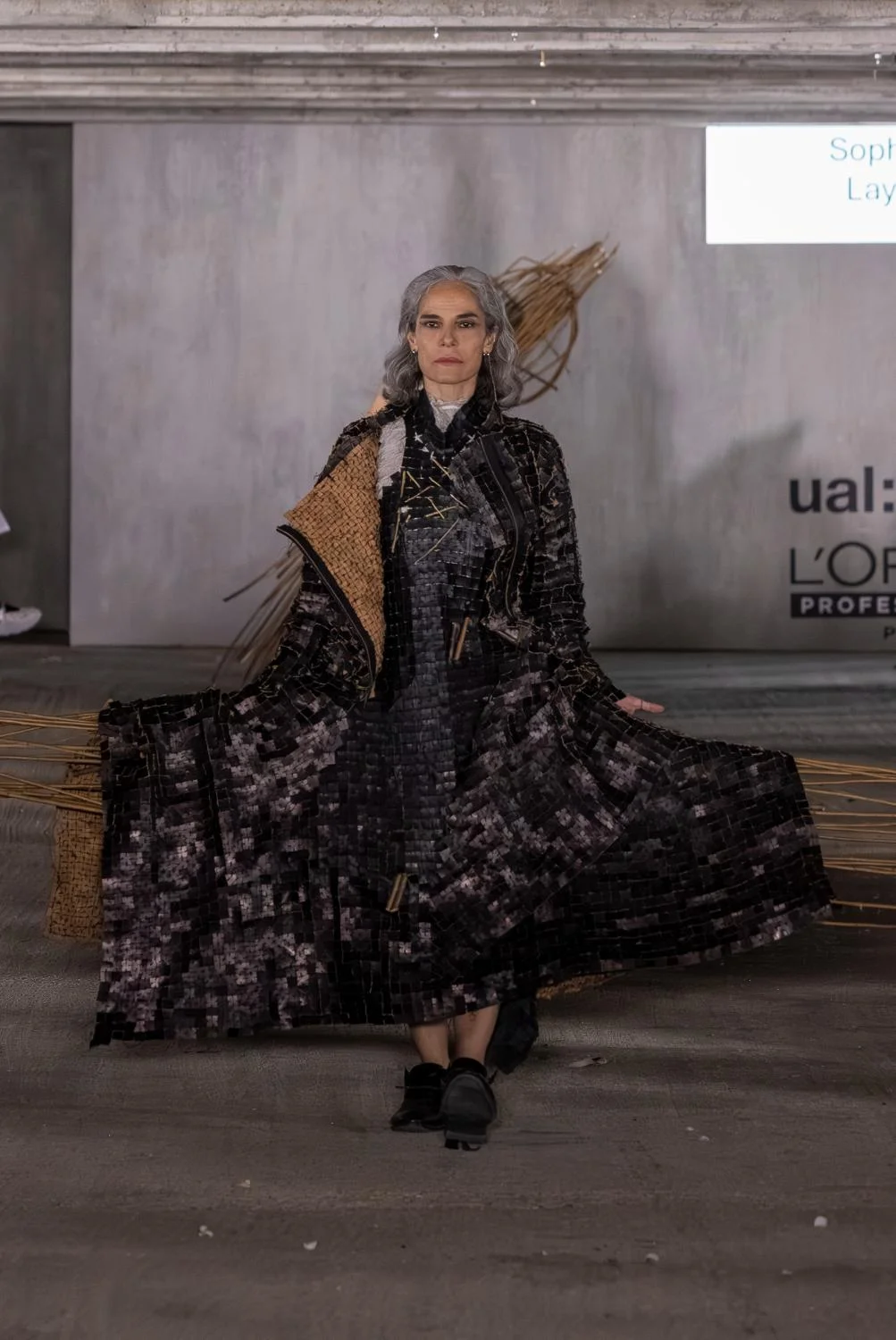
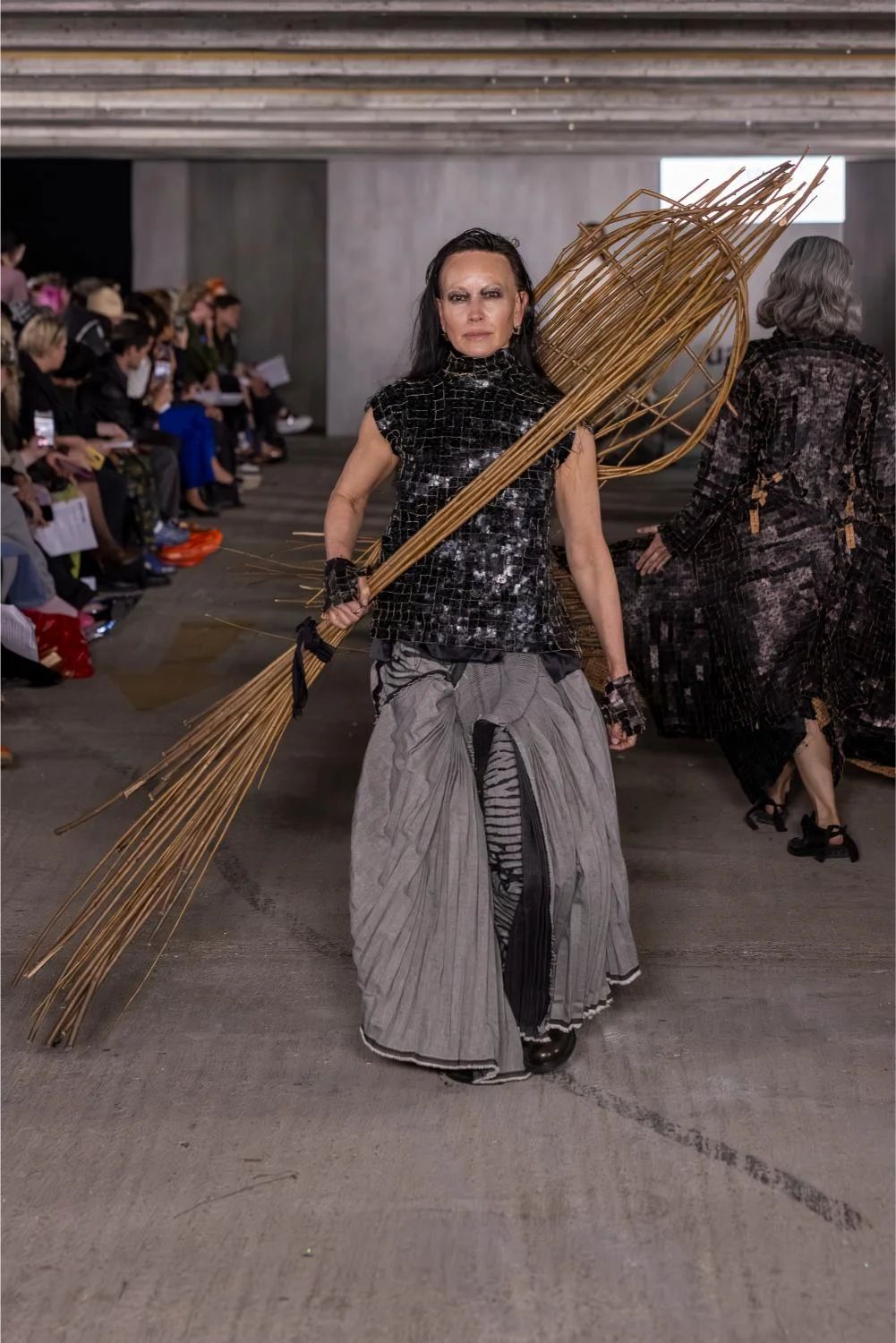
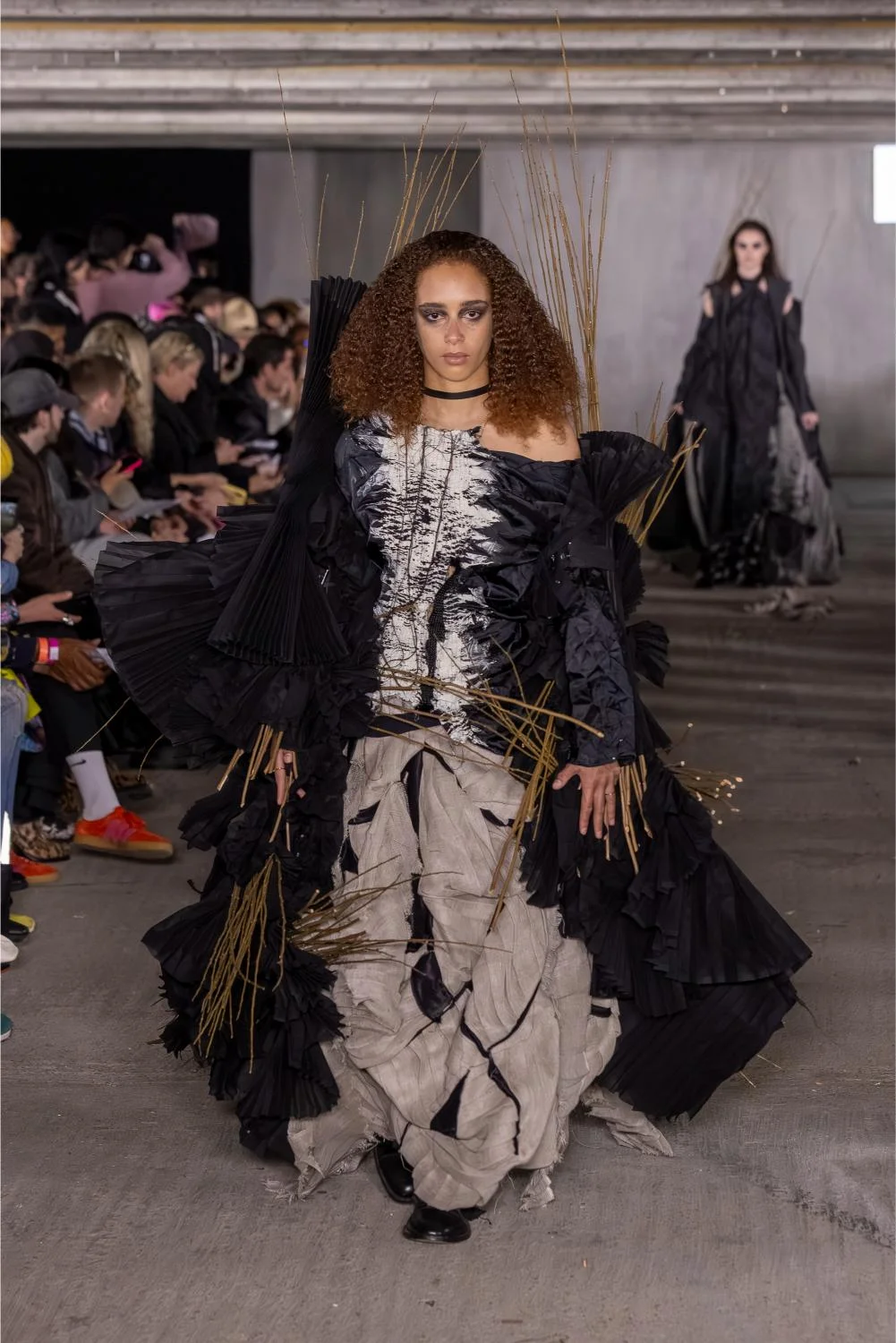
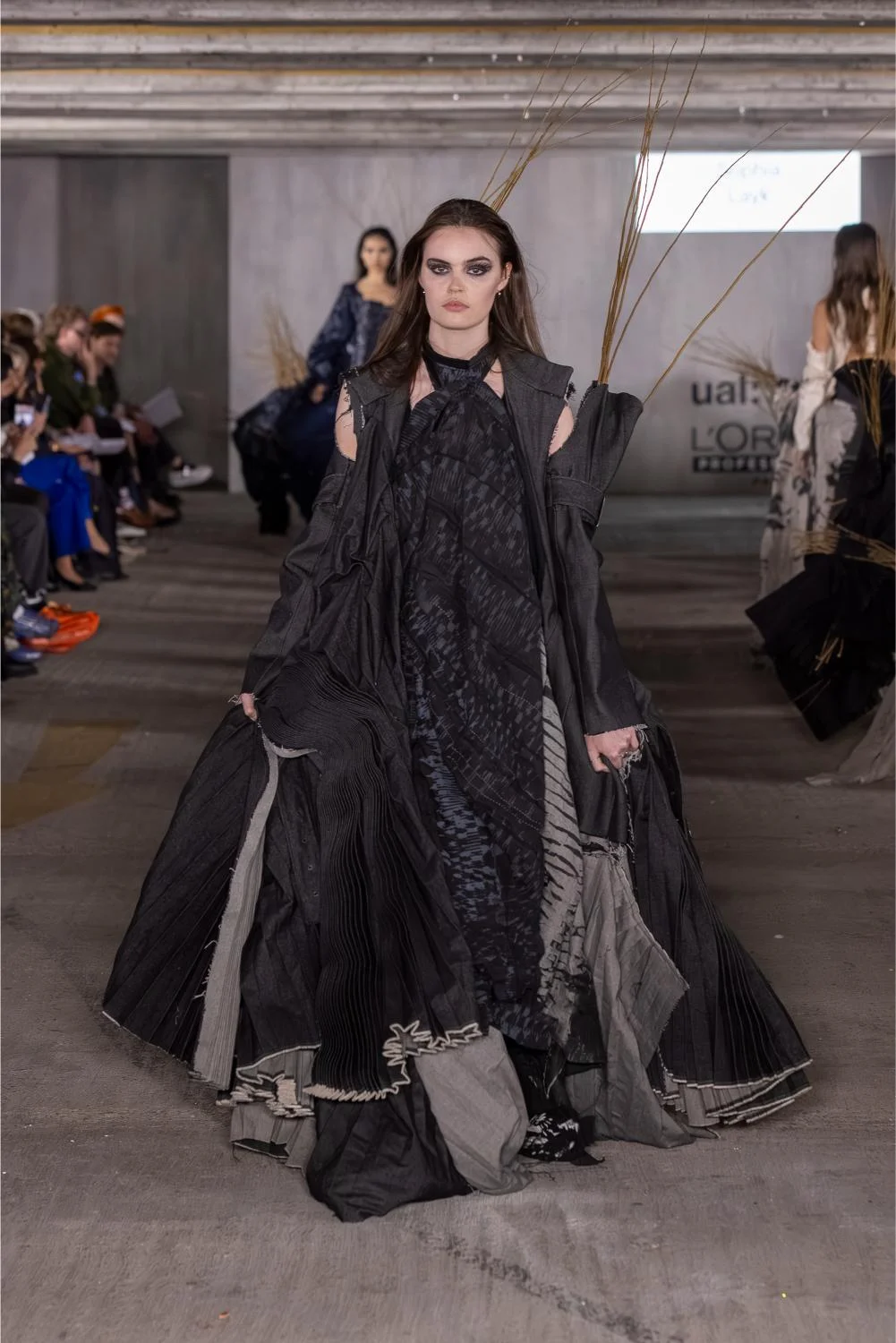
Sophia Layk
These are just ten of the forty students who presented their collections, all talented and original. One thing that struck me was the menswear collections, which seemed very introspective and placed their models in past, present or future utopic worlds making them carry (at times even literally) the weight of what it means to be alive during today. While the womenswear collections also functioned as introspective social commentary, they were much more rooted in the reality in which we currently live.
Commenti